



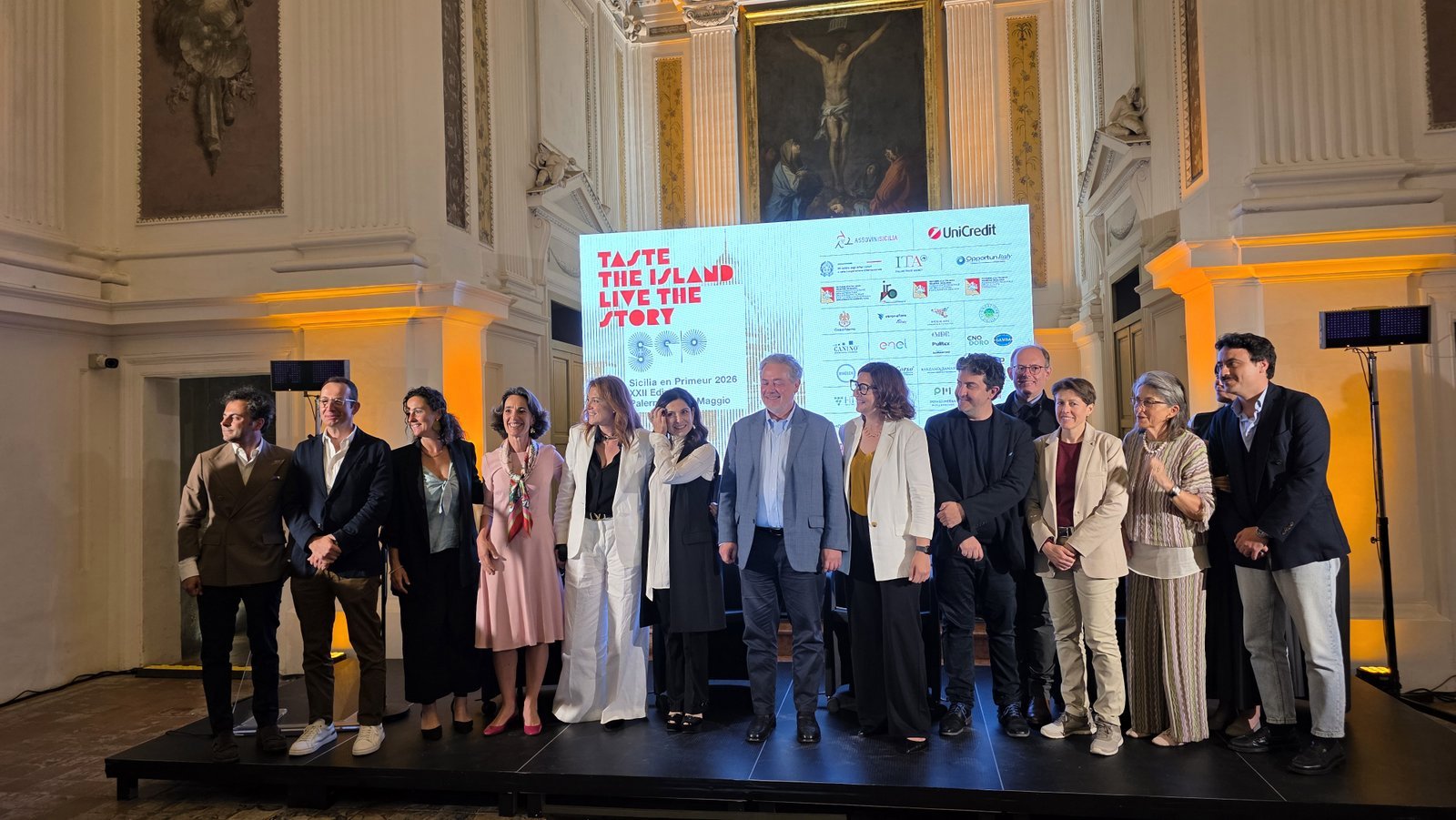
(WR) In Palermo, amidst baroque churches and ancient palaces, Assovini Sicilia opened the 22nd edition of Sicilia en Primeur with a simple yet ambitious question: how does a glass of wine transform into an unforgettable experience? The Sicilians seem to be finding the answer, numbers in hand. And it’s not a trivial answer.
Let’s start with the data, which in this case speaks louder than any poetic suggestion: in 2025, six out of ten Sicilian wineries saw an increase in visitors. These aren’t just passing tourists, but travelers who choose Sicily as a wine destination, and increasingly, they come from far away. Three-quarters of the wine tourists who pass through the gates of the island’s wineries come from abroad, especially from Europe and the United States.
These figures inspired the inaugural conference of Sicilia en Primeur 2026 , the event conceived by Assovini Sicilia, now in its twenty-second edition. Until May 15th, it brings to the island over one hundred journalists from around the world, 56 member wineries, and more than a thousand labels for tasting. This year, the choice, not by chance, fell on Palermo. The city offers extraordinary settings: the recently restored Real Albergo delle Povere, the Church of Santa Maria dello Spasimo, Palazzo Sant’Elia. Places that alone demonstrate how history and wine, in Sicily, are two sides of the same coin.
Hospitality as identity
“Talking about wine in Sicily inevitably means talking about travel,” said Mariangela Cambria, president of Assovini Sicilia, opening the proceedings.A journey that goes beyond the glass, encompassing landscapes, gastronomy, art, and encounters with local communities. The conference’s theme—Taste the Island, Live the Story—sums up this philosophy well: Sicily isn’t just meant to be tasted, it’s meant to be experienced.
And wineries are equipping themselves accordingly. Tasting rooms, wine shops, guided tours, and dedicated reception staff are now the norm, not the exception. Nearly six out of ten companies have already planned new experiences for 2026, focusing on increasingly sophisticated and premium offerings. A clear signal: Sicilian wine tourism has stopped improvising and has started building.
Green for real
But there’s one aspect that’s more surprising than all the others, and one that deserves to be discussed without reservation: sustainability . Nearly nine out of ten wineries—86.7%—produce energy from renewable sources. More than half cover at least 40% of their energy needs with green energy. 88% have eliminated single-use plastic in hospitality. Seven out of ten companies use lightweight bottles. It’s a structural transformation, silent and tangible, that is changing the face of an entire supply chain. At a time when many companies talk about sustainability but few actually practice it, the Sicilian wine sector seems to have embarked on a path that’s difficult to reverse: a winning skill for international visitors who are increasingly attentive to these issues.
Young people? They are there.
Another taboo is dismantled by the Youth & Wine Observatory research presented at the conference: 51% of young people between the ages of 20 and 24 consume wine in Italy, the highest figure ever recorded for this age group. They aren’t alienated from wine; they’re simply looking for something different. They seek authenticity, stories, and experiences to be had directly in the winery. Wine tourism, in this sense, could become the bridge between the new generations and an age-old culture.
Sicily, as Luca Sammartino, Regional Councilor for Agriculture, noted, is already Italy’s second-largest food and wine destination after Tuscany. This ranking wasn’t achieved by chance, but through years of work on quality, identity, and the ability to showcase itself to the world.
The challenge now is to transform all this into sustainable economic value—not just for the wineries, but for the entire region. Because when a visitor chooses a Sicilian winery, they’re not just choosing a wine. They’re choosing an island.
Sicilia en Primeur 2026 is funded by the Sicilian Region’s Department of Agriculture, Rural Development and Mediterranean Fisheries.