


by Umberto Gambino
The acquisition of the Angelini Wines & Estates group, with a 65% stake, marks a momentous transition for the Arnaldo Caprai winery, but it doesn’t alter its course: Marco Caprai remains president and CEO with a specific goal: to increase revenue from the current €7.5 million to over €10 million, focusing on high-end hospitality and an increasingly defined premium-luxury positioning. This partnership comes at a time of maturity for the winery and for Sagrantino di Montefalco, a grape variety that has undergone a radical transformation over the past ten years. This is also, and above all, thanks to the significant investments and added value that the Caprai family has invested in it: the mention of Sagrantino and the name Caprai have become a natural fit for wine critics and enthusiasts around the world.
Behind this profound transformation of Sagrantino is a name that has marked the history of world winemaking: Michel Rolland, who passed away last March 20th at the age of 78.
The Vinexpo gamble
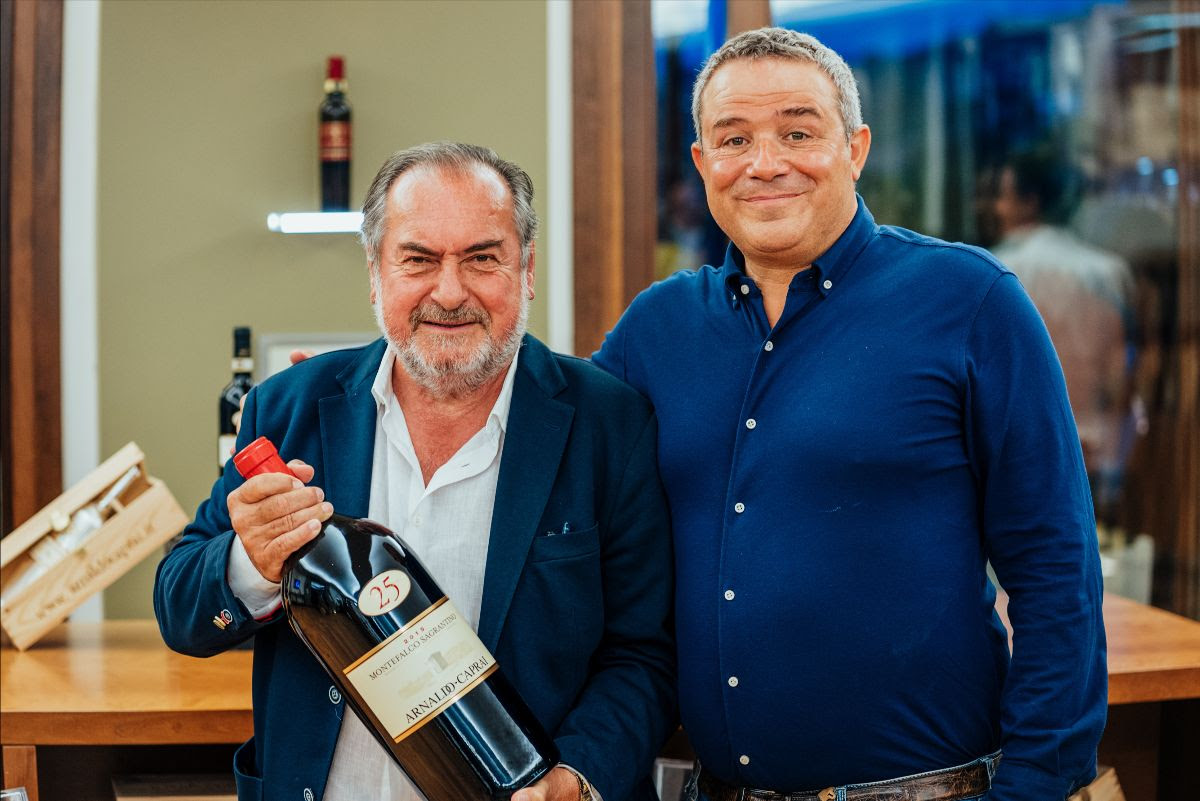
The bond between Marco Caprai and Sagrantino is visceral, built over 27 years of working alongside Attilio Pagli. But at a certain point, something shifted: the desire to explore an even higher dimension, to bring the Umbrian grape to a different stage. Marco had only one name in mind: Michel Rolland , the man who, back in the 1970s in Bordeaux, had understood that modern wine lay elsewhere—in cleanliness, in finesse, in the elimination of those “flaws” that were passed off as typicality. The fateful meeting occurred at Vinexpo 2015. Marco positioned himself in front of Rolland’s stand with his bottles and wouldn’t budge: “I’m not moving from here until I talk to him.” Thirty minutes of tastings followed, which would change the history of Sagrantino, the Caprai winery, and even Umbrian winemaking. From that harvest (summer 2015), one of those that mark the destiny of a territory, began a collaboration that saw Rolland and his right-hand man Julien Viaud (now his technical heir) work on the raw power of Sagrantino to transform it into something radically different.
Taming Sagrantino: integral winemaking
Sagrantino is unique: it contains two to three times the polyphenols of any other grape variety in the world. This is a tremendous asset, but also a major technical challenge. Rolland introduced so-called integral vinification to the winery, an approach almost meditative in its rigor. The whole grapes are placed in barriques with dry ice for two weeks, in the total absence of oxygen. During fermentation, each barrique is rotated three times a day: the skins become heavier, sinking, and rising. This slow, continuous bath works on the tannins without stressing them. The result is a texture that no longer bites and becomes velvety. A technique born for Merlot, boldly adapted to a variety that is polar opposite in structure.
The three labels in the glass at Vinitaly – The tasting
At the Caprai tasting counter at Vinitaly, Rolland’s legacy—and that of this entire journey—is clearly evident in three wines, including “Spinning Beauty,” created as a tribute to his father, Arnaldo Caprai, who recently passed away, and to the family’s textile history (the spinning needle on the label is no coincidence).
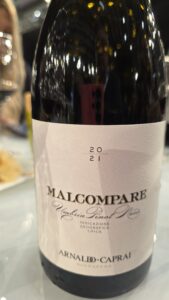
Malcompare Pinot Noir – The 2021 vintage demands patience: raspberry, floral, savory, and still-young tannins that need to unfold. The 2020 vintage appears more closed, almost unfinished—a sign of a grape variety that defies time at these latitudes and doesn’t always find the answer it seeks.
Belcompare Merlot – Here you can feel the touch of “Signor Merlot,” born in Pomerol. The 2021 is rounded, with aromas of blackcurrant and a fresh, direct palate. But the true masterpiece, according to Wine Reporter , is the 2020 : despite its 15.5% ABV, it offers a formidable balance of ripe red fruit and citrus tannins, long, precise, and almost endless.
Spinning Beauty (Sagrantino) –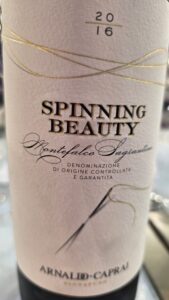 Aged eight years in barrique. The 2016 opens with notes of jam, licorice, incense, and chocolate, with a fresh and lively palate that promises much more. The 2015, the first vintage with Rolland, is spicier, with prominent tannins that express the power of the Umbrian terroir. Two wines still on the move.
Between joining the Angelini group and the technical legacy left by Rolland, Marco Caprai’s company has established itself not only as a wine producer, but also as a laboratory of ideas: a place where, like in a spinning mill, the possible future of Sagrantino continues to be sewn together.