


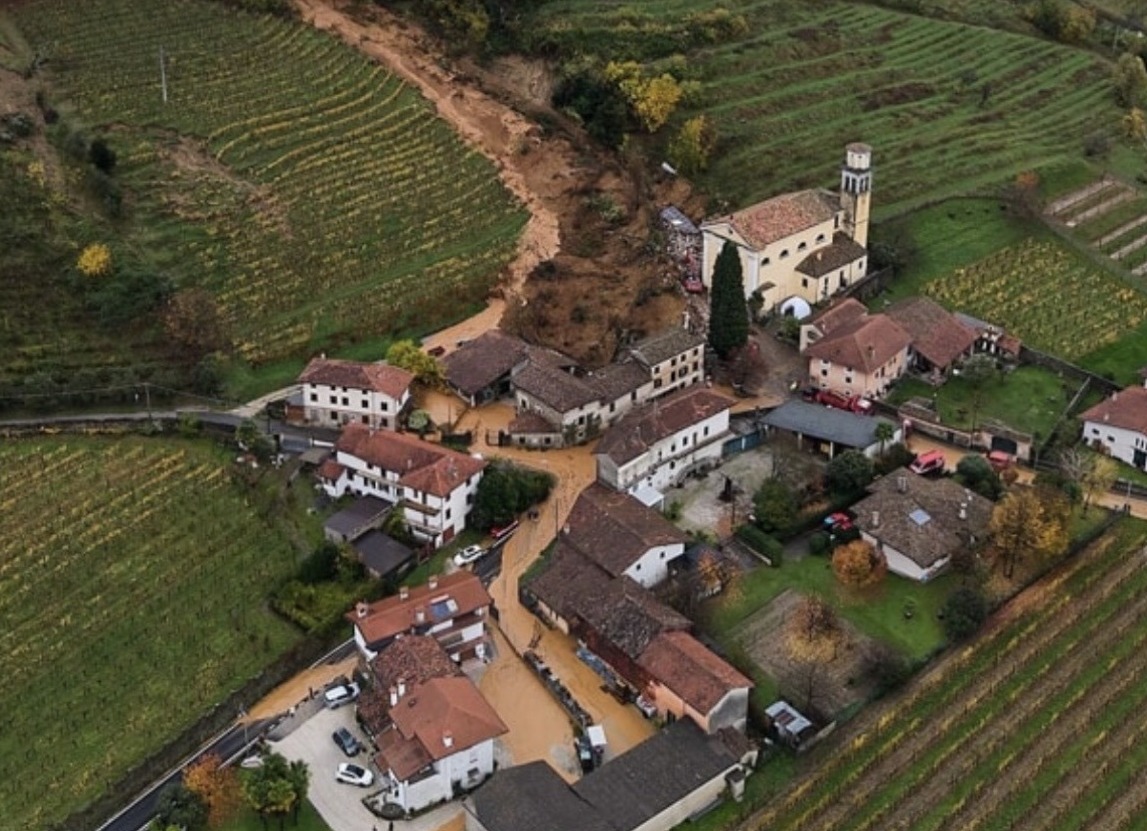
(WR) Not a request for subsidies, but a call to arms for expertise. From the heart of Vinitaly , fifty of Italy’s most prestigious wine producers—united beyond regional borders, from Sicily to Alto Adige—have addressed an open letter to the Governor of Friuli-Venezia Giulia , Massimiliano Fedriga . The message is clear: Ronco della Chiesa , Brazzano’s iconic vineyard devastated by the flood of November 17, 2025, must not be “buried” by invasive safety measures that would erase its soul.
“Ronco della Chiesa must not become the winemakers’ Redipuglia,” write the signatories, quoting the first signatory , Walter Massa . A powerful warning to prevent a temple of global viticulture from becoming a monument to loss, rather than a model of rebirth.
Why is this vineyard an “untouchable” heritage?
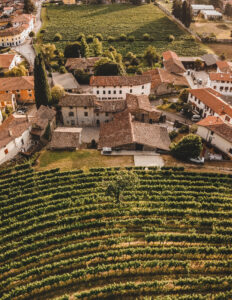
The mobilization of the group “Winemakers for Ronco della Chiesa” does not arise from aesthetic sentimentality, but from objective data that make this small plot of land on Mount Quarin an unrepeatable uniqueness:
The old vines: The vineyard contains vines over 40-50 years old . Oenological science ( Source: Italian Academy of Vine and Wine ) confirms that the aromatic complexity and ability to withstand climatic shocks of these plants cannot be replicated with new plantings.
The secret of the “Ponca”: The soil rests on a stratification of marl and sandstone (the Ponca), which guarantees legendary drainage and minerality. Geopedological documents from ERSA FVG warn: deep mechanical interventions (aggressive earthmoving) would destroy this ancient ecosystem forever.
Critics’ praise: It’s not just local pride. The Wine Advocate (Robert Parker) compared it to the Grand Crus of Burgundy , while Gambero Rosso and the AIS Vitae Guide have recognized it for over a decade as the absolute pinnacle of Italian viticulture.
Agriculture as a garrison, not as a victim
The letter to Fedriga calls for a paradigm shift: treating the hills with the “delicacy used by archaeologists.” The winemakers, who have been “reading” the territory for generations, offer their services as free consultants to support institutions and ministries. The goal is to save Nicola Manferrari ‘s company ( Borgo del Tiglio ), while also setting a virtuous precedent for the entire Italian hill system, which is increasingly fragile today.
Losing Ronco della Chiesa would also be a severe blow to the local economy. According to the Food and Wine Tourism Observatory , the Collio thrives thanks to these “iconic vineyards” that attract visitors from around the world. ” We are the agricultural Italy that has awakened,” the appeal concludes. The challenge is set: to demonstrate that the safety of the territory can and must coexist with the protection of beauty and history. Because, as Massa reminds us, “to move forward effectively, it is necessary to know how to look back.”