



by Umberto Gambino
There’s a secret in the hills of Cuneo, a secret that exudes freedom and intuition. If Barolo is the King and Barbaresco is the Prince, Langhe DOC is the family’s rebellious artist: unafraid to mix brushes, to experiment, and to ultimately exhibit in the most prestigious galleries in New York and Toronto.
Officially established in 1994 , but conceived during the creative ferment of the 1980s, this appellation is the product of a farsighted vision: to create more immediate, fruity, and “readable” wines for international markets. Today, what began as a “spin-off appellation” has become an identifying brand, a true territorial DOC that embodies the dynamic soul of 96 municipalities between the Langa and Roero regions.
A mosaic under your feet
Entering the world of Langhe DOC means immersing yourself in an unparalleled geological diversity. Here, vines don’t grow on just any soil, but on millennia-old marine sediment . As geologist Edmondo Bonelli explained, the hills here change face at every turn: from gentle, humid slopes to the steep, windy ones of the Alta Langa, where the embrace of warm downdraft winds ( Föhn ) and the soothing breeze of the sea ( Marin ) creates unique microclimates.
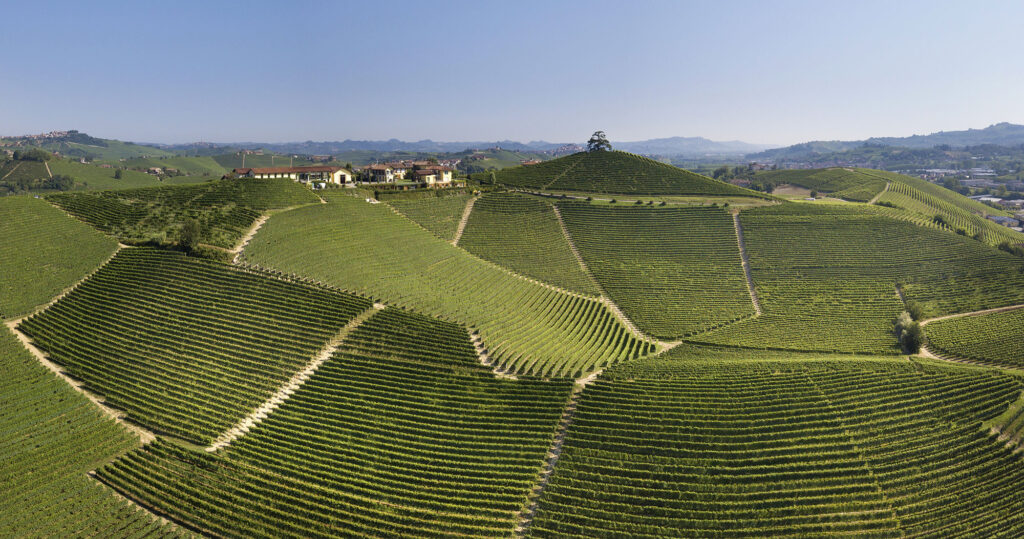
But the real magic happens underground. Marly, calcareous, sandy, and clayey soils intermingle, forcing the roots to grow horizontally due to the shallowness of the rocks. It is this “battle” of the vines, combined with the expert management of the slopes to avoid excessive vigor on the valley floors, that yields grapes with extraordinary aromatic concentration.
Producer’s freedom: flexibility and creativity
The Langhe DOC’s true ace in the hole is its flexibility . The regulations allow producers to indulge their imagination, bringing to the forefront prized native varietals like Favorita and Freisa , or challenging international ones like Chardonnay , Sauvignon , and Cabernet Sauvignon . But the beating heart is the Langhe Bianco and Langhe Rosso . Here, without the obligation to name the grape variety, the winemaker becomes a composer: he can vinify pure varietals or create bold blends, the so-called “estate wines,” which have become true collectors’ items. It’s tradition made modern: the same wise practice of the ancient winemakers who, when harvesting Nebbiolo, decided right at the vine row which bunches would defy time as Barolo and which would become a fresh and lively Langhe Nebbiolo .
Langhe DOC in Alba: the event report
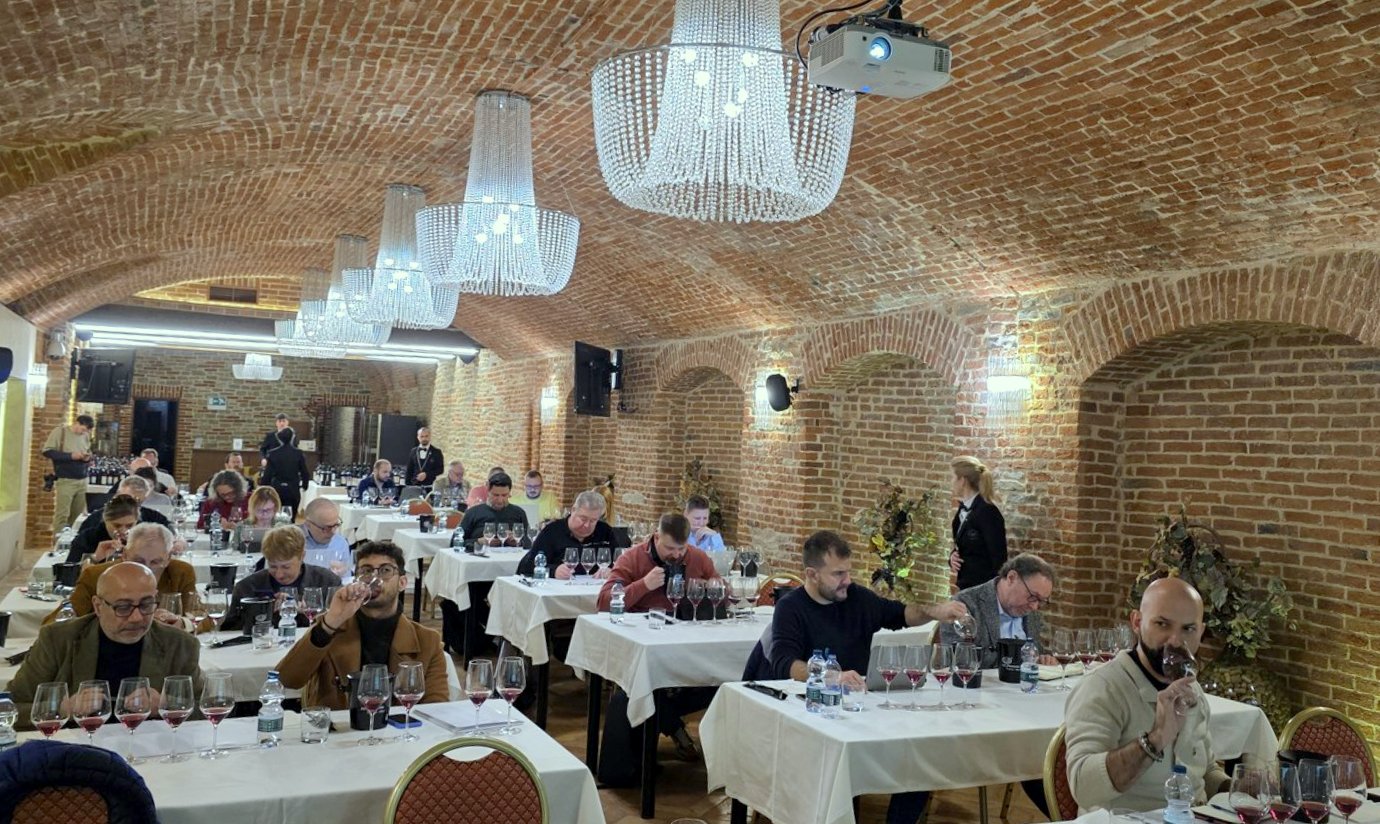
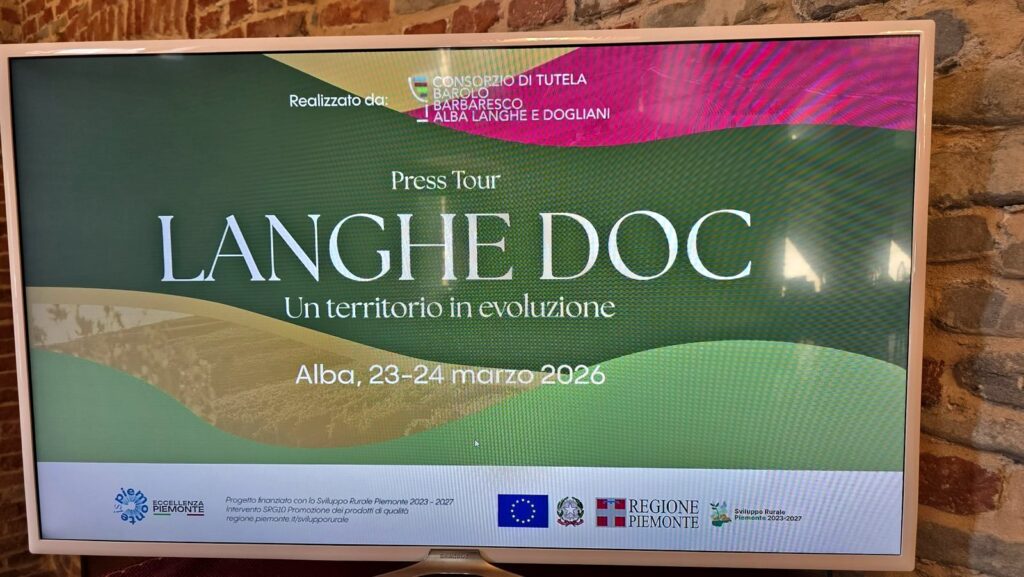 On March 23 and 24, 2026, Alba hosted the first edition of the event dedicated to the appellation, promoted by the Barolo Barbaresco Alba Langhe e Dogliani Consortium . Thirty-two journalists from across Europe tasted over 210 labels from 130 wineries. This success confirms the Langhe DOC as a versatile and constantly evolving appellation. This first step will require a strong relaunch by the Consortium for the next edition.
“With this first edition we wanted to mark a real starting point for the Langhe DOC – said the president of the Consortium Sergio Germano from the United States (where he is on a promotional tour for the denomination) We’re talking about a broad and transversal denomination, which today represents a fundamental platform for describing the region in all its facets. The response from the press, especially internationally, confirms that we’re on the right track to strengthen its positioning and recognition around the world.
Here are our top picks from the tasting sessions, divided by type and chapter.
The Whites and the Native “Heretics”
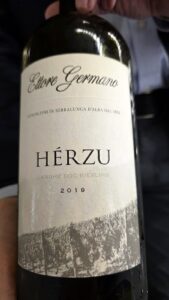 Arnaldo Rivera’s 2022 Nascetta del Comune di Novello is a surprising wine, a semi-aromatic native grape with a savory and peppery finish that offers a long finish. For those seeking international elegance, Ettore Germano’s 2019 Riesling Herzu is a dynamic masterpiece, characterized by hydrocarbons and freshness, while Cantina del Nebbiolo’s 2025 Sauvignon stands out for its distinctive character (tomato leaves and cut grass).
Let’s not forget the Freisa Coste del Frè 2022 of 499 winery , which at 500 meters above sea level gives a violet and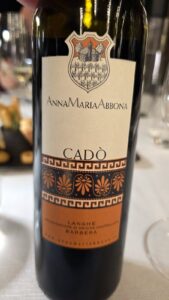 a nervous but very fine tannin, and the Barbera Cadò 2019 by Anna Maria Abbona : 80-year-old vines for a balsamic and deep sip of blackberries and tobacco.
Passionate Red: Between Blends and International
Ceste Franco’s 2020 Merlot Tubleu captivated us: 24 months in barrique yields a cocoa and vanilla blend that’s worthy of applause. Among the blends, Cagliero’s 2023 Galverno (Dolcetto and Nebbiolo) stands out, smooth and fragrant with Mediterranean scrub. San Biagio’s 2021 Cabernet Sauvignon is also noteworthy: distinctive, peppery, a signature of winemaker Gianluca Roggero, also vice president of the Consortium.
The Nebbiolo Army: Il Re in the “Prêt-à-Porter” version
The heart of the tasting was Nebbiolo, expressed in a thousand shades of freshness even if in many cases the wines (see the 2024 vintages) showed tannins that were still unripe and wood that needed to be disposed of:
Elegance in steel: The 2024 Bric Amel from Marchesi di Barolo and the 2024 Viù from Cascina Carlot focus on berries and flowers, with lively tannins that are fully evolving. The same philosophy is reflected in Gianni Gagliardo’s 2022 Da Batié , which evolves on notes of chocolate and tobacco while remaining only in steel.
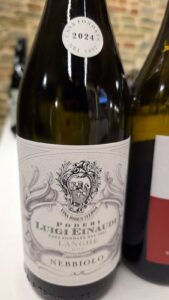 The 2024 Champions: Ettore Germano’s Nebbiolo 2024
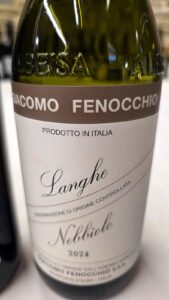 It was the absolute pinnacle for balance and acidity. Close behind are the finesse of Giacomo Fenocchio , the persistent softness of Aldo Manfredi , the spicy balance of Poderi Luigi Einaudi , and the verticality of Pasquale Pelissero’s Pasqualin .
Structure and oak: The 2024 ReVA (aged in Austrian oak) is a paragon of composure and body, while the 2023 Vinory ranks among the absolute best for elegance and smoothness. Balsamic and licorice notes emerge in the sips of the 2023 Nebbiolo from Fratelli Abrigo and Francesco Borgogno (a splendid vertical tasting).
Harmony and potential: The 2023 Gheddo appeared excellent and harmonious, with perfect tannins. Giuseppe Negro’s Monsù (aged 16 months in oak) and Massimo Rivetti’s Avene , long and linear, were surprising for their complexity. Vietti’s 2023 Perbacco confirmed its body and aging potential, while Roberto Voerzio’s 2023 Nebbiolo finished beautifully with a nose of fresh roses and a savory, balanced palate. Finally, Giuseppe Grasso’s 2021 vintage offered exciting notes of damp earth and mushroom, a sign of a noble evolution.
Conclusion . Langhe DOC should no longer be considered the “little sister” of the great Piedmontese reds. It is a vibrant ecosystem, an open-air laboratory where the soil speaks and the producer translates.