by Umberto Gambino
It is a fact that is in the cold numbers: in 2024 , global production and sales of Champagne recorded a significant decline. According to the Comité Champagne , global shipments reached 271.4 million bottles , marking a decrease of 9.2% compared to the previous year. The record is from 2022 with 325 million bottles sold worldwide. France is not exempt from the minus sign, a country where the decrease reached 7.2%, with 118.2 million bottles sold last year. Exports were 153.2 million bottles in 2024 (56.4% of total sold) with a decrease of 10.8%. Italy is the world’s fifth largest market in terms of value: in 2023 , Champagne shipments to Italy reached 9.9 million bottles (-6.8% on 2022, a record year) for a value of 265.8 million euros. The final statistics for 2024 will be released in April.
This global decline in sales can be attributed to various causes, including inflation, global economic and political uncertainties, the concrete prospect of the introduction of US tariffs. Also very concrete is the competition from cheaper alternatives, such as Prosecco , which has negatively affected Champagne sales. But even today, “Champagne is synonymous with all the good things in life.” And for Maxime Toubart , president of the Syndicat Général des Vignerons and co-president of the Comité Champagne, ” Champagne is a true barometer of consumer sentiment, and this is not the time to celebrate.” A moment, unfortunately, that has become a rather long period.
Champagne is always a wine that wins for its versatility, it is multifaceted, it is not only the drink synonymous with celebration, elegance, hedonism and special moments, but it is undoubtedly a perfect accompaniment to many dishes.
Perfect Pairings for Every Type of Champagne
(according to the Italian Champagne Bureau)
Brut Champagne. It is a versatile pairing, perfect for a wide range of dishes, from seafood to soft cheeses, to white meats such as roast chicken or turkey.
Champagne Extra Brut. With its very dry flavour, Extra Brut is best paired with sushi and sashimi or steamed shellfish (simply dressed lobster or crawfish).
Demi-Sec Champagne It is sweeter, so ideal for creamy desserts, fruit cakes, tiramisu or panna cotta or with lightly spiced Asian cuisine such as light curry dishes.
Champagne Blanc de Blancs. Elegant and fresh, Blanc de Blancs pairs well with fish dishes such as tuna tartare or baked sea bass, seasonal salads or refined vegetarian dishes.
Champagne Blanc de Noirs. More structured and full-bodied, the Blanc de Noirs is ideal for light red meats (pork fillet or veal), mushrooms, truffles and creamy risottos.
Champagne Rosé. With its fruity notes, the Rosé pairs well with berry-based dishes (salads with pomegranate or fresh cheeses), pink meats (duck or raw ham), dark chocolate desserts.

THE FLAVOUR PALETTE FOR TEN RIGHT CHAMPAGNES TO PAIR
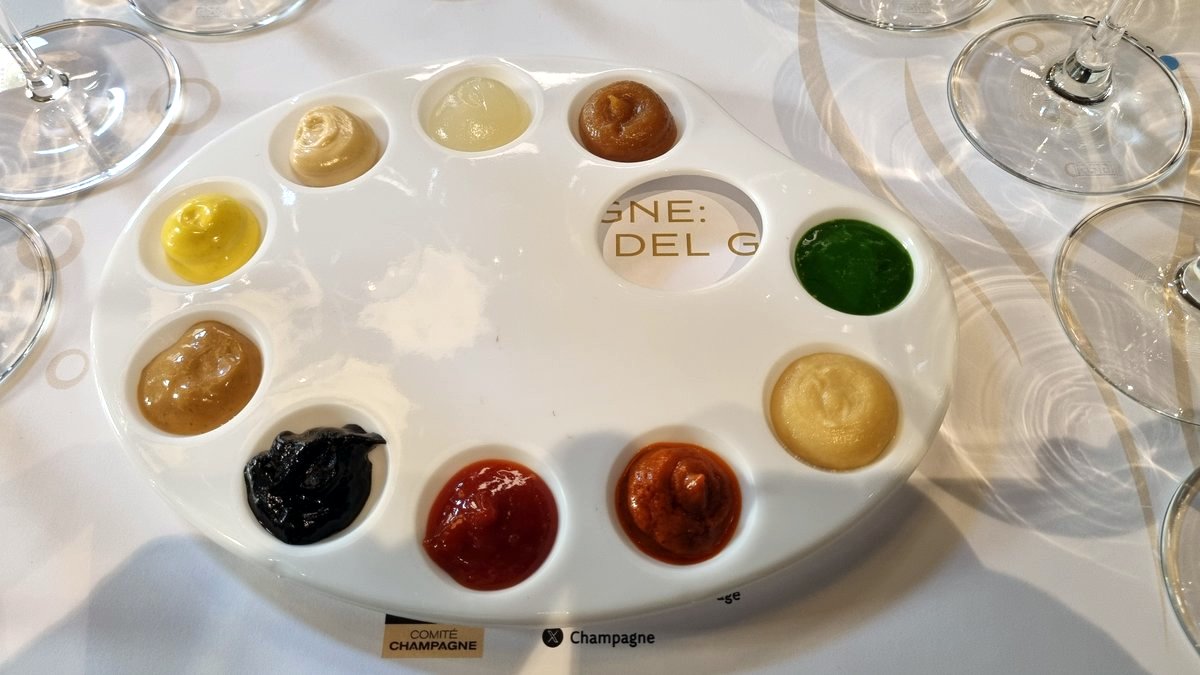
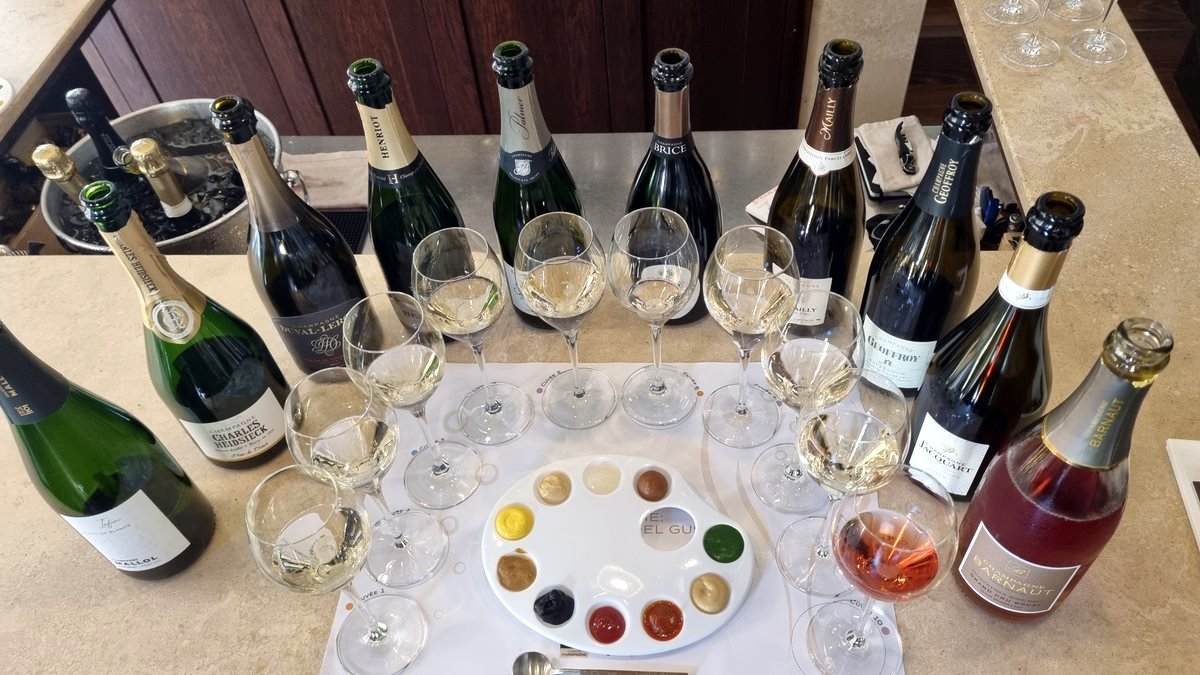
An extraordinary example of how to pair different types of Champagne with equally refined dishes is the “palette of flavors”, successfully tested also in Rome, at the Pipero Restaurant, thanks to chef Ciro Scamardella who presented 10 dishes transformed (or rather “synthesized”) into as many essences on an ideal sensorial, colored palette, so as to invite guests to recognize the flavors blindly, trusting only their senses. Ten possibilities, each with its own potential Champagne to be paired for a palette of flavors presented just like a painter’s palette.
The tasting-workshop, proposed by the Bureau du Champagne Italia, was based on this suggestion to bring to the palette the colors, scents and tastes of ten essences, each paired with a different cuvée. Here they are in detail, according to the choices of the expert sommelier Nicola Roni, Italian Ambassador of Champagne in 2007.
- Mallol “Infini” – Blanc de Blancs Brut (100% Chardonnay blend, 48 months on yeasts)
### with creamed spinach (bright green color)
A cream with a very clean, vertical taste, concentrated on the herbaceous in its most central part where chlorophyll prevails. A sensation of fat balanced by an elegant roundness with a ferrous note due to the stem of the grass. Paired with a Blanc de Blancs for aromatic affinity, given by the presence on the nose of vegetal notes such as mint and aromatic herbs.
- Charles Heidsieck – Blanc de Blancs Brut
 (from 10 Crus of Chardonnay grapes, 48 months sur lie)
### combined with copper onion cream (beige color)
Cream with a sweet, round and fat taste, in which the sweet caramel note stands out, fused with a prevalence of butter. An essence that recalls the classic French Soupe à l’oignon (as said by the chef). The roundness given by the butter marries with a Blanc de Blancs that has the task of degreasing the mouth, but also of giving freshness and minerality to the combination.
- Duval-Leroy Fleur de Champagne Premier Cru (70% Chardonnay, 30% Pinot Noir, base wine from 2014, 6 years of aging on the lees)
### with smoked pepper (bright red color)
Roasted pepper, peeled and lightly seasoned. The burnt skin, some seeds and the taste of the oven bundles in the last part of the cooking give notes of toasted and smoky. On the palate it is fat, compact and delicious. Ideal accompaniment with a Champagne that assembles Chardonnay and Pinot noir with the black grapes to give the right structure to the pairing.
- Henriot Souverain Brut (45% Pinot Noir, 40% Chardonnay, 15% Meunier, a blend of 29 crus, 3 years sur lie)
### paired with a grapefruit chutney (red color)
An explosion of flavors that plays between fruity sweetness, lively acidity and the bitter aftertaste typical of this fruit. It has a slightly dense consistency that envelops the palate. A combination that is enhanced with Champagne and that traces a long line that allows the chutney to be part of a fish appetizer, but also the topping for a dessert. Freshness and softness characterize Champagne.
- Palmer La Reserve Nature (Pas Dosé – 50-55% Chardonnay, 30-35% Pinot Noir, 20-25% Meunier, 6 years sur lie)
### goes well with cuttlefish ink and potatoes (black color).
It is the classic Italian seafood appetizer. The cuttlefish, stripped of its calloused consistency, regains the precious ink contained in its sac. The result is a marine flavor, with iodine and savory notes. In closing, a light acidic note. The dense consistency and the persistence of the taste recall the suggestions of the sea, evoking many dishes based on molluscs and seafood, which find their natural combination with non-dosed Champagne, with a decisive touch and a marked imprint of acidity.
- Brice Blanc de Noirs Grand Cru Extra Brut (100% Pinot Noir from the Grand Cru of Bouzy; fermentation and aging in 228-liter barrels and in stainless steel tanks, without malolactic fermentation; storage on the lees in the cellar for 24 months)
### combined with manteca marina (light brown color)
The essence of the manteca marina is the exaltation of the classic seafood dish. Compact and marine taste, enveloping and intensely persistent, in which you can distinguish mussels, clams, cockles and more. A Champagne with a low sugar content offers an accentuated mineral flavor that prolongs the iodine sensations.
- Mailly Grand Cru Blanc de Noirs Brut (reserve wine aged in barrels using the Solera method)
### with curry mayonnaise (full yellow color)
The curry mayonnaise is balanced, creamy, spicy, slightly exotic. The spices and fattiness of the eggs pair perfectly with a Champagne Blanc de Noirs, able to give balance, acidity and bring out peppery sensations.
- Geoffroy Expression 1er Cru Brut (35% Pinot Noir, 35% Meunier, 30% Chardonnay; 50% current vintage 2019 and 50% perpetual reserve started in 1970)
### paired with smoked beef (light beige color)
Cream with a fat, full, very long, enveloping and persistent taste. It reminds of roasted meat, with its juices that create a perfect balance between sweetness, flavor and fatness. The smoky note makes the body of the cream leaner and gentler. A blended Champagne, a wine with structure and maturity, can provide the aromatic breadth necessary for the taste-olfactory bond.
- Jacquart Blanc de Blancs Brut 2015 (100% Chardonnay, 6 years sur lie)
### with lychees (almost transparent color)
Lychee, with its delicate scents of rose, almond and white flowers, is fresh, well-balanced and transversal, capable of crossing the border between dessert and savory appetizers. The fruity sensations of Chardonnay and the maturity and complexity that a vintage Champagne is able to give enhance the delicacy of lychee.
- Barnaut Bouzy Grand Cru Rosé Brut (85% Pinot Noir, 15% Chardonnay, blend of different vintages and different grape varieties, matures in vats and bottles for 3 years)
### paired with dried figs and rum (bright brown color)
The essence is a concentrate of warm and enveloping flavors. The intense sweetness of dried figs intertwines with the aromatic notes of rum, perfect to accompany moments of conviviality, with a touch of elegance and tradition. The structure and the deep color of a Champagne Rosé are the ideal support for the dried fruit and the alcoholic component of the rum.