



by Umberto Gambino
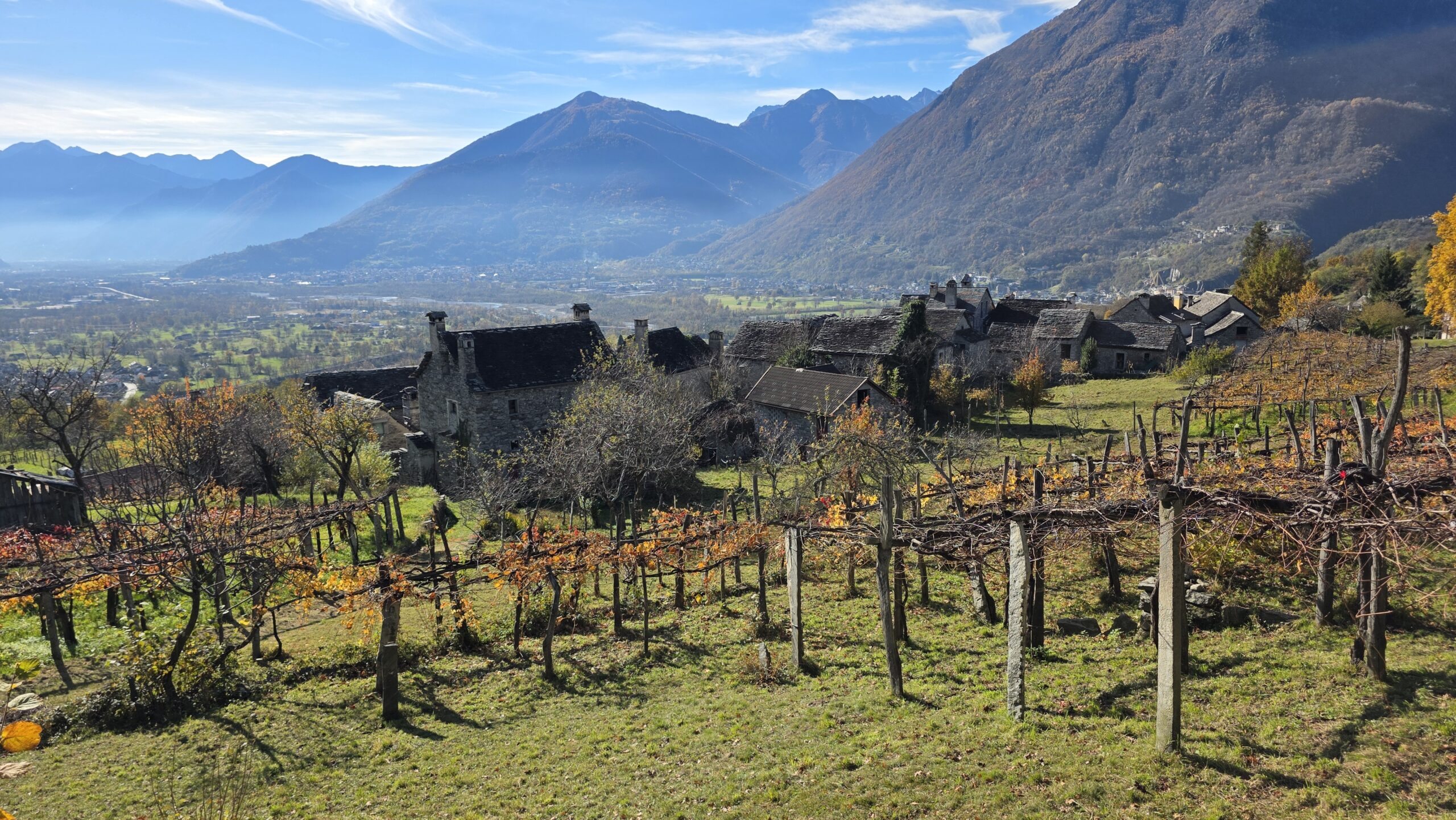
The hilly region of Northern Piedmont, long renowned for its viticulture, is experiencing a renaissance. In the late 19th century, phylloxera devastated these parts, too. Once rich in vineyards, the entire area saw its vineyards drastically reduced (from 45,000 to 1,300 hectares) due to the boom in the textile and hydroelectric industries after World War II. The few remaining producers have preserved a winemaking heritage of the highest quality and finesse, now increasingly sought after by connoisseurs, far removed from the standardization of taste. After decades of neglect, many producers are returning to their ancestral lands: we are thus witnessing a generational turnover that has brought young winemakers more determined than ever to relaunch Northern Piedmont wines. Therefore, in Northern Piedmont, quality wine is not born by chance: it has deep historical roots.
The secret to the quality of these wines lies in a virtuous blend of microclimates and unique soils. The imposing presence of Monte Rosa acts as a natural shield against the cold north winds, while night breezes from the glaciers ensure ventilation and temperature ranges that favor the development of complex aromatic profiles (spices and medicinal herbs) in Nebbiolo , the region’s flagship red grape, known as Spanna in the provinces of Biella and Vercelli and Prunent in the Novara area. Other important varietals include Uva Rara, Vespolina, Croatina, and Erbaluce for the whites (and Chardonnay is also present).
Soils and the Val Sesia Super Volcano
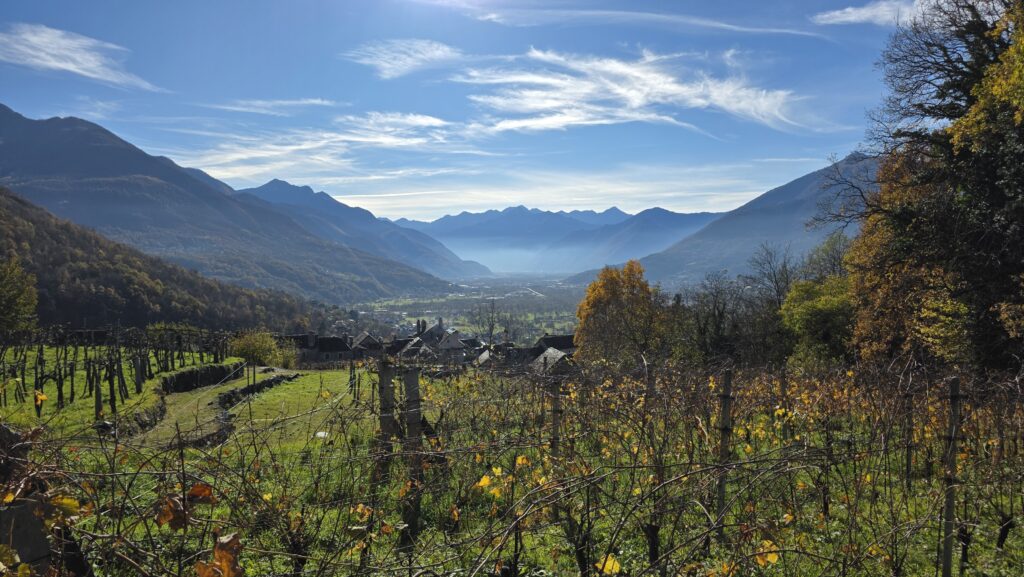
Geologically, Northern Piedmont is a true mosaic terroir, predominantly characterized by acidic, mineral-rich soils that give the wines complex structures and pronounced minerality. The Nebbiolo from this area clearly displays a distinctly savory character compared to the Nebbiolo from southern Piedmont. Porphyry and volcanic rocks dominate areas such as Gattinara (compact, ochre-brown porphyries) and Boca (crumbly, pink porphyries, poor in humus), yielding wines of great tension and savory character. These unique characteristics are due to the strong influence of the soils on the final wines: these soils are dominated by volcanic rocks originating from the explosion of the Valsesia Super Volcano , which occurred approximately 280 million years ago.
Marine sediments are found to the West (Coste della Sesia) and in areas such as Lessona and Bramaterra , contributing to the finesse of the wines.
Gravel and iron characterise the denominations on the eastern coast of the Sesia river ( Ghemme, Fara, Sizzano ), presenting gravelly and loose soils, rich in iron and magnesium.
Soils originating from Alpine moraines are typical of the Ossola Valleys: here you can admire terraced vineyards that develop on moraine deposits with a high concentration of granite.
The vineyards of Northern Piedmont extend across the provinces of Biella, Novara, Vercelli and Verbano Cusio Ossola.
The Taste Alto Piemonte event
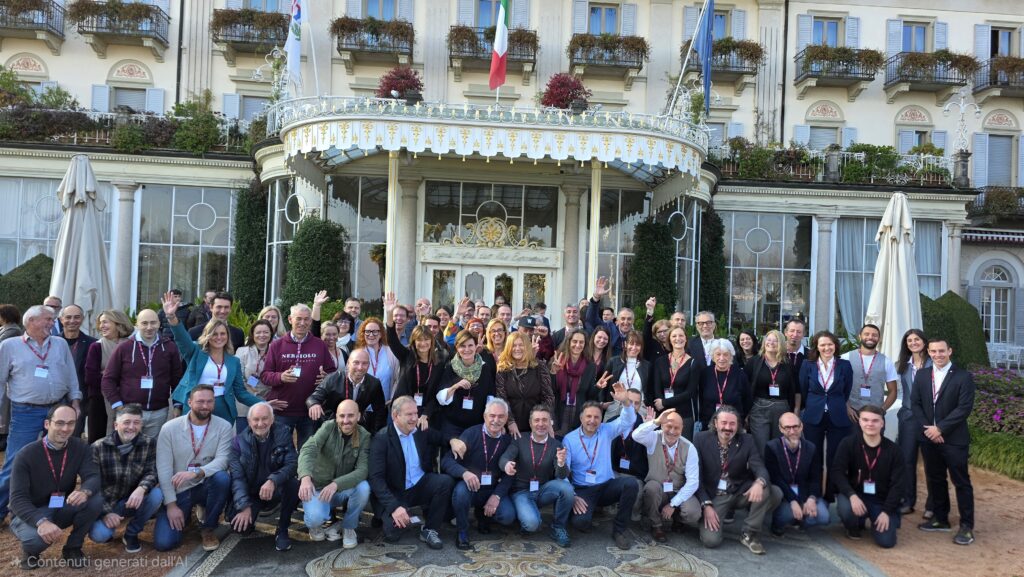
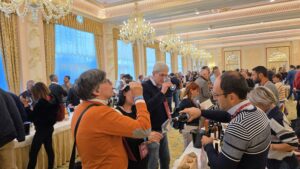
The best opportunity to get to know the wines of this historic area was to participate in Taste Alto Piemonte , organized in the iconic Grand Hotel des Iles Borromèes in Stresa by the Consorzio Tutela Nebbioli dell’Alto Piemonte, which has been promoting and enhancing the region’s wines since 1999.
“An event of this importance represented a fundamental opportunity to promote our region and the Alto Piemonte denominations,” commented Andrea Fontana, president of the Consorzio Tutela Nebbioli Alto Piemonte (Northern Piedmont), “not only nationally, but also to neighboring countries, such as Switzerland, strengthening ties and opportunities to learn about the protected denominations.”
“The idea of bringing Taste Alto Piemonte to the shores of Lake Maggiore was an important signal” declared the vice president of the Consortium, Lorella Zoppis .
Ten wine denominations were tasted during the event: the Gattinara and Ghemme DOCGs and the Bramaterra, Colline Novaresi, Coste della Sesia, Fara, Lessona, Sizzano, and Valli Ossolane DOCs.

Over 50 producers presented their new vintages at tastings (open to the public) and masterclasses organized by AIS Piemonte. Total production of Northern Piedmont wines is approximately two million bottles, including 950,000 from Colline Novaresi, 450,000 from Gattinara, and 90,000 from Ghemme. The other seven DOCs range between 15,000 and 50,000 bottles.
Watch the interview with the president of the Nebbioli Alto Piemonte Consortium, Andrea Fontana, here.
The denominations
Let’s get to know the individual denominations better, starting whttps://www.youtube.com/watch?v=hxqw-JVMjNoith the two DOCGs.
Gattinara boasts ancient origins: the first vines were planted by the Romans in the 2nd century BC. In 1518, the Marquis of Gattinara, Grand Chancellor of Emperor Charles V, introduced Gattinara wines to the imperial court, introducing them to the European aristocracy. Modern Gattinara wines are made from pure Nebbiolo grapes , or at least up to 90% , with small amounts of Vespolina and Uve Rara, together up to 10%. The production area is exclusively the municipality of Gattinara in the province of Vercelli.
The blend of Ghemme , celebrated by Fogazzaro in “Piccolo mondo antico,” is almost identical. Its origins are traced back to the 4th-5th millennium BC. The production regulations for this wine allow for a blend of Vespolina and Uva Rara grapes up to 15%, but many producers choose to vinify it purely with Nebbiolo. The required aging period is 34 months, 18 of which in wood, while the Riserva is 46 months, 24 of which in wood. The Gattinara and its Riserva are aged for an additional month. The Ghemme also spends 6 months in the bottle before being released.
The fundamental presence of Nebbiolo is constant in the red wines of all DOCs, with the participation of small quantities of Vespolina, Uva rara and Croatina and in some cases also Barbera and Merlot.
Bramaterra DOC, known as the wine of the canons, is produced in seven municipalities in the provinces of Biella and Vercelli; Boca DOC is produced in five municipalities in the Novara area; Lessona DOC is unique to the eponymous municipality in the Biella area: it was with a Lessona wine that the many-time minister Quintino Sella toasted the first government of unified Italy. Sizzano DOC is also produced from grapes grown in the municipality of the same name in the province of Novara. Fara is a DOC typical of the Novara area, while Coste della Sesia is a more complex denomination originating from vineyards in four municipalities in the Vercelli area and 13 in the Biella area. Finally, the Valli Ossolane DOC, entirely within the province of Novara, encompasses the territories of 19 municipalities. Typical of this area is the “Toppia,” a terraced vine training system where the pergolas rest on shallow soil with a good gravel structure, ideal for water drainage.
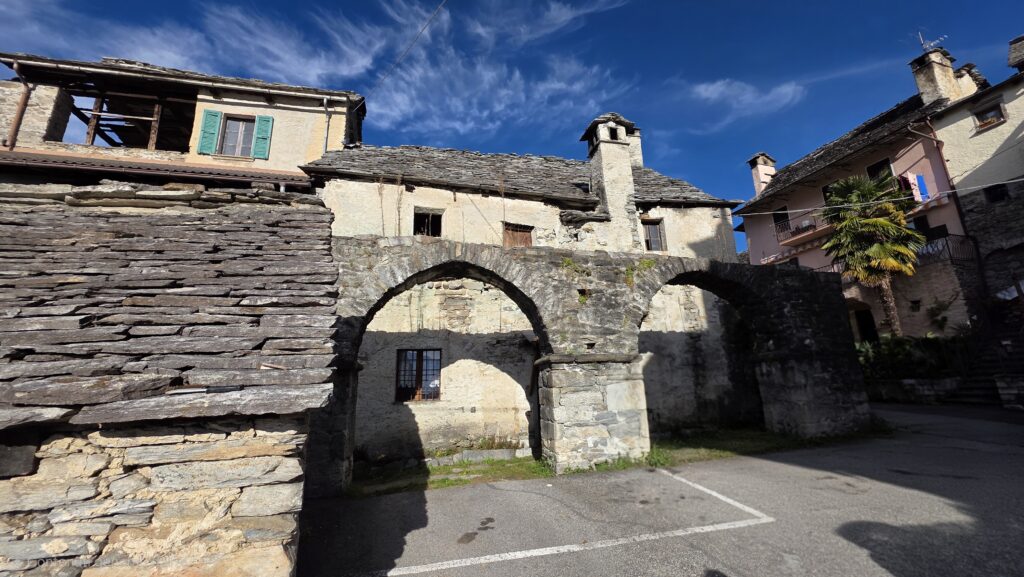
An interesting tour of the Ossola Valley led us to discover a rural and farming world, made up of pastures, dairies, and traditional foods that mark a “slow” pace of life, a stark contrast to the frenetic pace of modern life. A “break” that served to bring us closer to nature. Worthy of special mention is the hamlet of Burella di Montecrestese , at 450 meters above sea level, one of the oldest settlements. Here you can admire the remains of pre-Roman tombs, the ancient washhouse, the stone arches in the oratory square, and the church of San Rocco. Today, this hamlet is almost entirely uninhabited, a symbol of the passing of time.
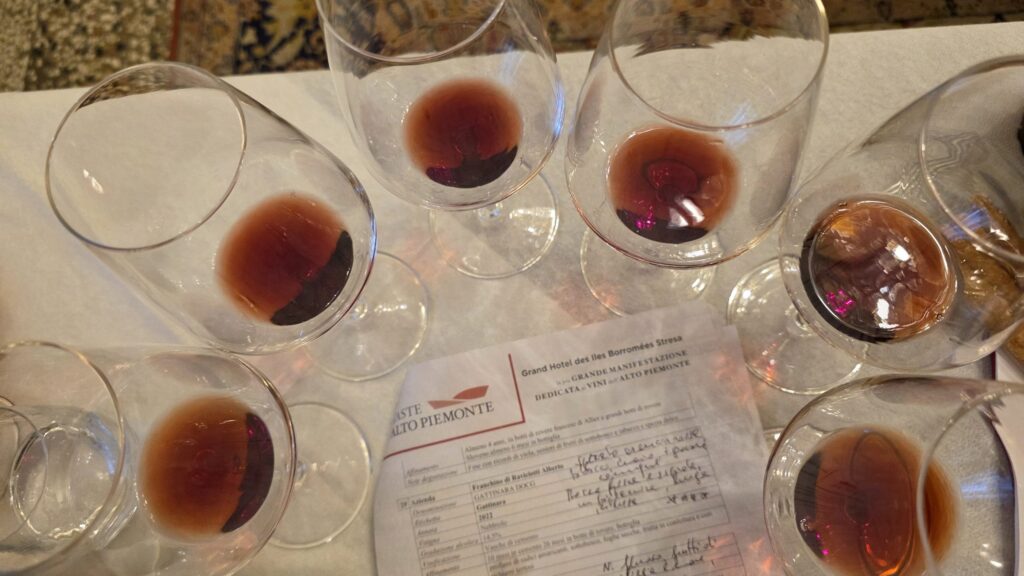
The best Northern Piedmont tastings in the tour (in alphabetical order)
Antoniolo – Gattinara Riserva San Francesco DOCG 2019
100% Nebbiolo. A fine and varied bouquet with notes of blackberry, juniper, cloves, tobacco, and leather. The palate is balanced and dynamic, characterized by a pronounced savory character and fine tannins.
Tappia Winery – Prunent Valli Ossolane Nebbiolo Superiore DOC 2023
100% Nebbiolo. Aromas of berries, cherry, followed by cinnamon, black pepper, and cloves. On the palate, freshness, savory flavor, softness, and lovely, fine tannins define the pleasant drinkability of this truly territorial red.
Cantine Garrone – Prunent Valli Ossolane Nebbiolo Superiore Vigna Fornace DOC 2023
Defined by the winemakers themselves as their mother’s cru. The balsamic notes are evident on the nose, with hints of licorice and blood orange. On the palate, it is enveloping, intense, savory, and full-bodied, with elegant, well-structured tannins. Only 1,300 bottles produced.
Carlone – “Mariapia” Erbaluce Colline Novaresi DOC 2024
A white wine made from Erbaluce grapes (which cannot be listed on the label). A delicate nose with hints of white flowers and aromatic herbs, bold flavors, and citrus notes. A juicy and intriguing flavor. A satisfying drink.
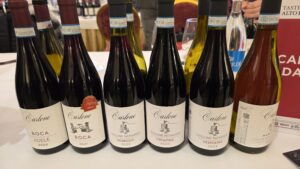
Carlone – “Adele” Boca Colline Novaresi DOC 2020
Made from a single Nebbiolo clone selected year after year. The nose is iridescent, iron-rich, floral, and balsamic. On the palate, it displays lovely tannins, complexity, and persistence. The winery has been managed by Tuscan winemaker Emiliano Falsini since 2023.
Damiano Cavallini – Caramino Fara DOC 2022
70% Nebbiolo, 30% Vespolina. A bouquet of flowers and red fruits followed by balsamic notes. Softness and mellow tannins blend well with the savory finish provided by the Nebbiolo. Intense and classy!
Centovigne – The Centovigne Coste della Sesia Nebbiolo DOC 2019
Nebbiolo 85% Vespolina 15%. It stands out for its aromas of sweet spices and aromatic herbs, while on the palate it is vibrant, muscular, with noble and decisive tannins.
Goddess – Proodos Valli Ossolane Nebbiolo Superiore DOC 2023
A Val d’Ossola company owned by the Stratta family: they started out as beekeepers and honey producers; since 2023, they have also been involved in viticulture.
Pure Nebbiolo (here called Prunent). On the nose, Mediterranean scrub, medicinal spices, and balsamic notes. On the palate, intense, fresh, savory, and full-bodied, with evident fruitiness and a good finish.
La Smeralda – Colline Novaresi DOC Bianco 2023
Erbaluce. Subtle notes, between vegetal and fresh flowers, on a distinctly green background. On the palate, it’s very savory, mineral, well-structured, and pleasant to drink.
Noah – Rocks of Light Bramaterra DOC 2021
80% Nebbiolo, 10% Croatina, 10% Vespolina. Hints of berries, Mediterranean scrub, cherries, ferrous notes, and black pepper. Intense, full-bodied, savory, and long-lasting. Beautiful structure.
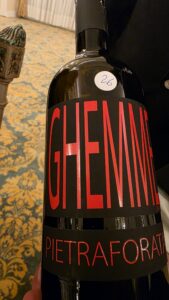 Pietraforata – Ghemme DOCG 2017
95% Nebbiolo, 5% Vespolina. Notes of plum, cherry, rose, followed by juniper berries and cloves, cinnamon, and licorice. Well-crafted fruit, savory, soft, and with fine tannins, the palate is long, pleasant, and fully territorial.
Guido Platinetti – Vigna Ronco al Maso Ghemme DOCG 2021
100% Nebbiolo. The aging process clearly contributes to the high-quality fruit base. From cherry jam to tobacco, leather, and licorice. A lively, powerful palate with well-crafted and polished tannins. Long and taut on the palate.
Tenuta Sella 1671 – Lessona Homage to Quintino Sella DOC 2016
90% Nebbiolo, 10% Vespolina. Aromas of spices and berries, Mediterranean scrub, dried flowers, and blood orange. A slightly smoky flavor, with sweet spices and aromatic herbs, and a long finish.
Travaglini – Gattinara Riserva Tre Vigne DOCG 2020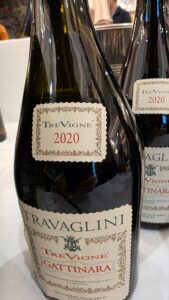
It comes from grapes harvested only in the finest years from three of the company’s historic vineyards (Lurghe, Permolone, and Alice), on rocky volcanic soils rich in granite, porphyry, and iron. It has an evolved, refined nose, with notes of dark chocolate, tobacco, and leather against a balsamic, cherry jam background. The palate is strong, full-bodied, with crisp tannins. A great wine from the company that has been a trusted companion throughout the region for decades.
Travaglini – Gattinara Riserva Vigna Ronchi DOCG 2019
100% Nebbiolo. In the glass, it opens with intense aromas of ripe cherry and plum, licorice, violet, and ginger. On the palate, it expresses silky tannins, a pronounced flavor, and a lengthy finish. Elegant and intense.
Final Considerations
It’s impossible to make a single statement about all the wines of Northern Piedmont. We’re talking about an area of 1,300 hectares of vineyards, yet it’s small and very diverse. The influence of the soil and microclimate is felt in the final wines, with some substantial differences. We found good tannin processing, bordering on perfection, for the two DOCGs, Gattinara and Ghemme, especially in the 100% Nebbiolo wines. We appreciated elegance, flavor, structure (without exaggeration), and great balance, with very careful alcohol management. These two wines clearly stand out from the others in the quality pyramid of the region.
In the Colline Novaresi bottles, we found the older vintages to be superior to the younger ones, and the pure Nebbiolo wines are always preferable. The addition of Vespolina and Croatina gives a more intense color to the local reds without impacting the flavor.
“Easier” wines, or at least wines best enjoyed not too far into the future, are those from the Coste della Sesia DOC. The Boca, Bramaterra, Fara, and Sizzano wines are well-crafted, but they don’t stand out in absolute terms (with a few notable exceptions).
The wines of the Ossola Valley deserve a special mention, where viticulture has ancient roots in a habitat seemingly left behind in time. Here, we enjoyed some pure Nebbiolo wines that blend structure and elegance with aromas that recall the very essence of the soil. These are authentic wines where the correspondence between land, grape variety, and final wine is a masterstroke, thanks to the foresight of the new generations of winemakers.
In conclusion: the few pure white wines we tasted from Erbaluce were fresh, savory, and intriguing. And we’re curious to try the Chardonnay we’ve been promised.