



by Umberto Gambino
The word “duties” is undoubtedly among the most frequently cited and searched for online throughout 2025. Duties are linked to another term: export (export for Anglophiles). For those of us who love and follow the fortunes of Italian wine, wine exports for much of the past year have been affected by the introduction of duties on our bottles sold in the United States, the most important market. The most optimistic forecasts indicate that total Italian wine exports could exceed €8.2 billion in value in 2025, with an estimated growth of around 1.5% compared to the previous year. However, final figures are yet to be confirmed. What is certain, however, is that according to the latest reports, the sector has had to face the challenge of new 15% US duties (which came into effect in August 2025), which have had a negative impact, especially in the final months of the year, on the value of our wine exports to the US market.
According to official ISTAT data, the total value of Italian wine exports to the United States in the first seven months of 2025 was around 1.1 billion euros.
To give an idea of the negative impact of tariffs on Italian wine exports, consider that the United States represented a market with imports worth almost €2 billion in 2024. Although it remained the leading market for our wines, growth was wiped out in the second half of the year, precisely as a result of the new customs duties.
Ultimately, Italian wine exports to the United States suffered a sharp decline in July and August (-28% in value), despite anti-tariff “discounts” from Italian producers, which lowered their prices by an average of about 17% during the period. This is the summary of the
In the third quarter, the price of Italian wine destined for the US saw an average cut of 15%, with French wine cutting by as much as 26%.
“There’s no denying,” commented Lamberto Frescobaldi, president of UIV , “that we’re experiencing market tensions, with nearly 110 million euros lost in the last quarter alone compared to US exports produced in the same period last year.”
In 2025, a climate of uncertainty has developed that has impacted both US demand and the distribution strategies of Italian producers. In a scenario fueled by ongoing geopolitical tensions and in which the weakness of the dollar (which reduces the purchasing power of American buyers) is also playing its part, understanding how wine leaves Italy and the most strategic routes currently exist to reach the rest of the world—especially the United States and the Far East—is crucial for industry professionals, consortia, and readers.

Tariffs force changes: between front-loading and diversification
Trade tensions with the United States have had two immediate effects: early shipments (so-called front-loading : US importers ordered more before the new customs duties went into effect) and, subsequently, a reduction in orders , especially for the most cost-sensitive appellations. The result is more volatile exports, prompting many Italian wineries to look even more closely at markets such as Japan, South Korea, China, Hong Kong, and Southeast Asia.
At the same time, 2025 confirms a structural trend: wine travels primarily via sea container , while air freight remains reserved for high-end labels or express shipments. Intermodal logistics, with its role in connecting rail, road, and ports, continues to grow as an organizational pillar of the Italian system.
Where Italian wine comes from: key logistics nodes
Ports: the true hubs of exports
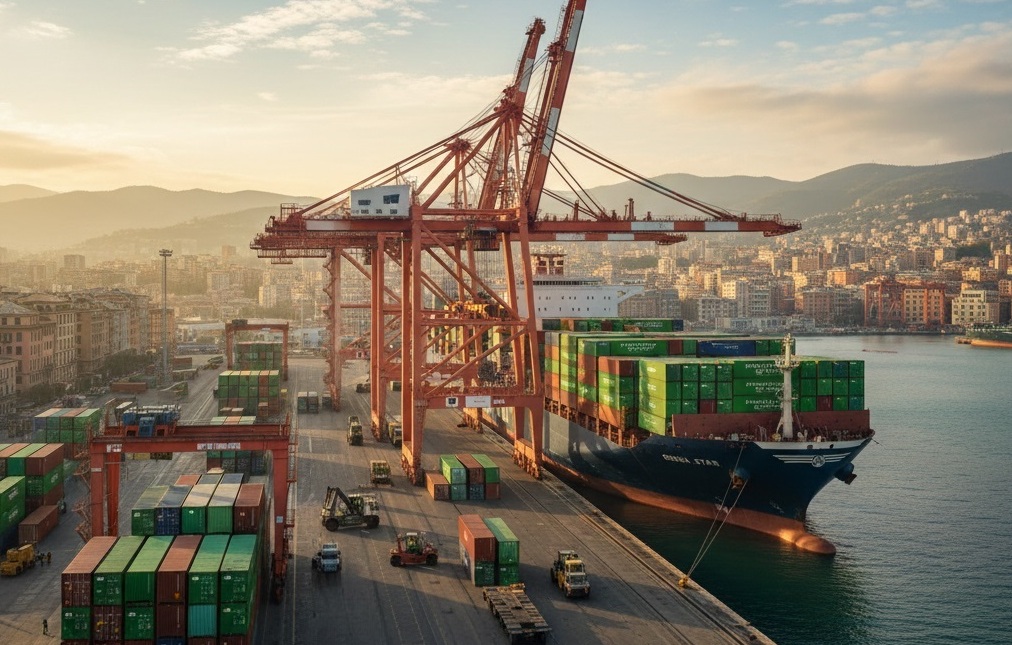
Ninety percent of Italian wine destined for overseas travels by sea. Here are the most important ports:
Genoa
It is the main gateway (access point) to Northern Italy. It is served by numerous transoceanic lines to the East and West Coasts of the United States and to major Asian hubs. The container terminals offer dedicated services for temperature-sensitive products, including reefers (refrigerated containers).
La Spezia
Widely used by Tuscany, Emilia and Veneto, it is one of the most efficient ports for container traffic and has consolidated rapid connections to the United States and the Middle East/Asia.
Livorno
It’s favored by producers from Central Italy (primarily Tuscany) and, in some cases, Southern Italy. It offers both container services and connections to ro-ro traffic (i.e., a maritime transport method in which wheeled goods (vehicles, trucks, trailers, machinery) are loaded and unloaded from ships via ramps, without the use of cranes, optimizing time and costs and reducing the risk of damage). It’s one of the traditional departure points for large volumes of Chianti, Bolgheri, and other Tuscan appellations.
Trieste
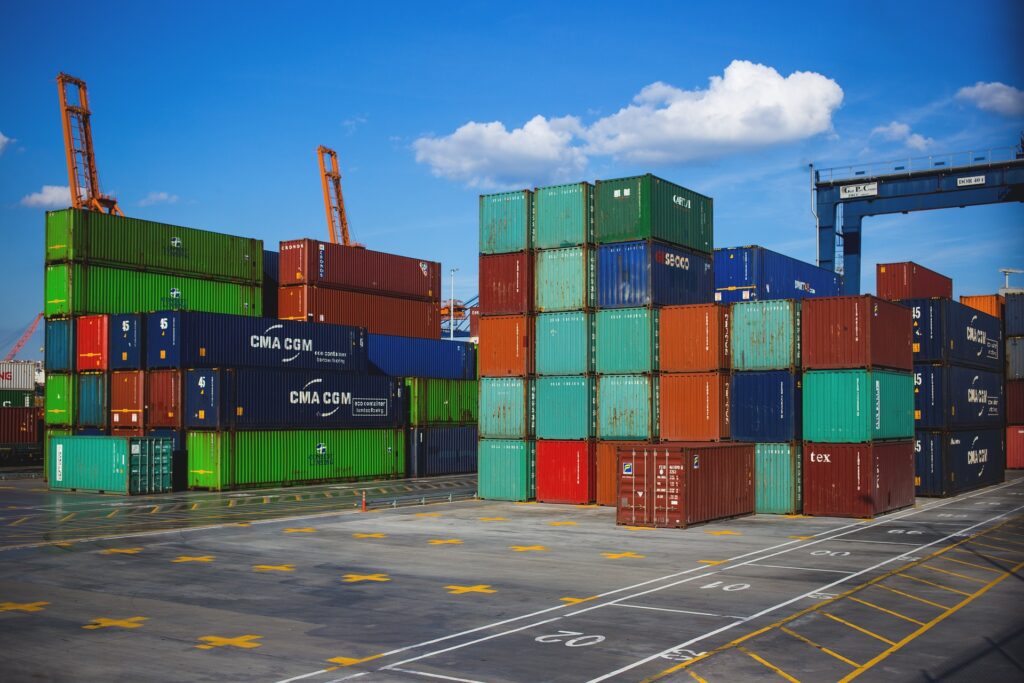
It stands out for its high level of intermodality and direct rail connections with Central Europe, from which many containers depart for Asia.
Venice
It is particularly used for mixed and consolidated loads coming from Veneto and Friuli, especially for sparkling wines and Prosecco.
Gioia Tauro
It is not a typical port of embarkation for small producers, but it is a crucial transhipment hub (transfer of goods from one means of transport to another) in the Mediterranean: many wine containers departing from La Spezia, Genoa, or Trieste end up in transit here before continuing on to Asia or the Americas.
The airports
Only a small but crucial percentage of wine travels by air. High-value bottles (Brunello, Barolo, Supertuscan), samples for trade fairs, urgent orders from distributors, and shipments to auctions and collectors almost always pass through major airports.
Milan Malpensa
Italy’s main cargo hub. It has direct flights to New York, Chicago, Miami, Hong Kong, Seoul, and Tokyo. The e-commerce component related to premium wine is growing.
Venice, Bergamo, Rome Fiumicino
They have a complementary role and are used by forwarders and regional operators for smaller shipments or for belly-cargo connections (space in the holds of scheduled flights).

Freight Villages and Land Logistics: Behind the Scenes of Exports
Most wine is bottled and prepared for shipment far from ports. For this reason , Italian freight villages are essential as consolidation and routing centers. These are the most important:
Verona Interporto (Quadrante Europa) – the logistics heart of Northern Italy, with regular trains to ports in Northern Europe and the Mediterranean.
Padua Interport – widely used for Prosecco and other Venetian denominations.
Bologna Interporto – central hub for Emilia-Romagna and Tuscany.
Ancona Interport – important for the Adriatic area and rail connections to Trieste and Venice.
Container consolidation takes place at interports: pallets of wine from different producers are loaded onto the same container to optimize costs. This is also where rail or road transport to the port of shipment is decided.
How wine travels: not just containers
The standard form is 20′ and 40′ containers. The wine travels:
in cartons on pallets: the norm for bottled wine;
in reefer containers (refrigerated) when thermal control is required;
or in bulk , via flexitanks (flexible tanks), when large foreign bottlers package locally (generally less common due to the high value of Italian denominations, but used for some entry-level typologies).
Final destinations: where Italian wine arrives
Towards the United States
The main ports of arrival are:
New York – New Jersey (East Coast) : the most important in terms of value, because it serves the entire East Coast market.
Savannah and Charleston : increasingly used for the Southeastern USA.
Los Angeles and Long Beach (West Coast) : Gateways to California, Nevada, and cross-country rail distribution.
The average transit time by ship is 15–22 days for the East Coast (direct routes or via Mediterranean hubs), 28–35 days for the West Coast.
Towards the Far East
Main ports of arrival:
Shanghai, Ningbo, Shenzhen (China);
Busan (Korea);
Tokyo/Yokohama and Osaka (Japan);
Singapore and Port Klang (Southeast Asia hub).
Routes are generally via Suez, with average times of 25–32 days to China and Korea and up to 35–40 to Japan and Southeast Asia.
The effect of tariffs on the logistics system
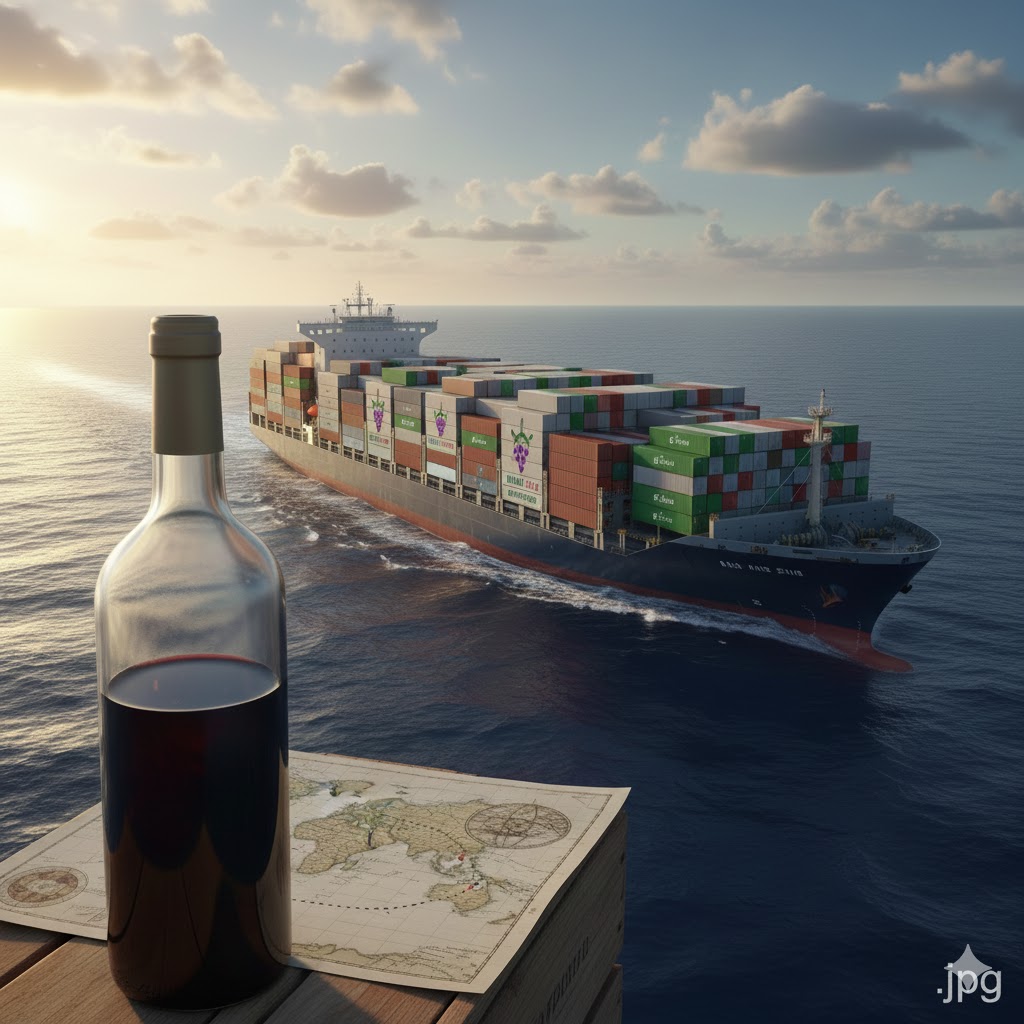
The impact of US tariffs has not been limited to prices: it has affected logistics planning in various ways through reduced orders, greater volatility in demand (organising the supply chain is more difficult for wineries and shippers) and greater interest in Asia and emerging markets, in order to maintain competitiveness.
Outlook for 2026
The future of Italian wine exports will depend on the dynamics of tariffs and the results of international negotiations. It’s clear that exports are moving toward greater diversification into markets other than the US. Two trends are already clear:
the growth of Asia as a strategic market : especially Japan and Korea, where the premium public is willing to pay for quality and origin.
Logistics reorganization : more intermodality, greater efficiency achieved by logistics players, greater attention to temperature, traceability and sustainability.
In this context, we must be optimistic: Italy starts from a position of strength thanks to a network of competitive ports, a solid intermodal system, and the international reputation of its wine, which alone remains a powerful commercial driver.
Written on data obtained from Istat, UIV, ICE sources