



by Umberto Gambino
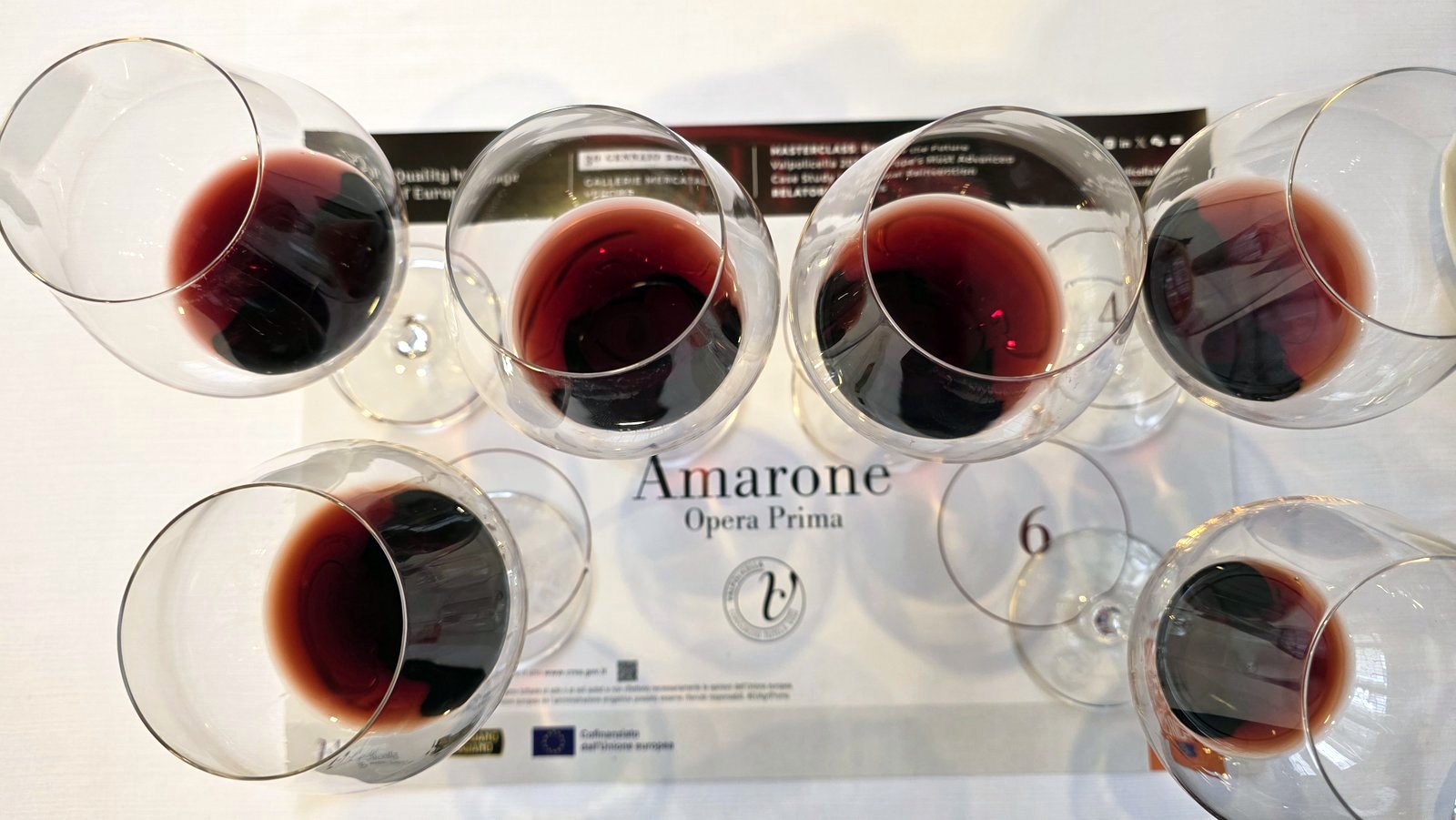
It’s not just a wine, but a collective ritual that defies time and climate. At Amarone Opera Prima , the Gallerie Mercatali transformed into the stage for a vintage, 2021 , defined by the Consortium’s experts as “the best of the new millennium.” The real news is the simplest and most counter-current: in a fast-paced world, Valpolicella has consciously chosen to slow down, rediscovering fallowing as a sacred art and the pergola as a natural shield against global warming.
See the full video report on the WineReporter YouTube channel, including an interview with the Consortium’s president, Christian Marchesini.
Identity in the Glass: Toward a “Gastronomic” Amarone
The trend is clear: the era of heavy, meditative “monument wines” is giving way to vibrant elegance. The new Amarone seeks layered freshness, drinkability, and savory tension. The 2021 vintage, despite a chilly spring and a dry summer, yielded healthy grapes and above-average anthocyanin content. The result? Wines ready to stand the test of time, yet capable of being enjoyed today.
New frontiers to bypass the tariff effect
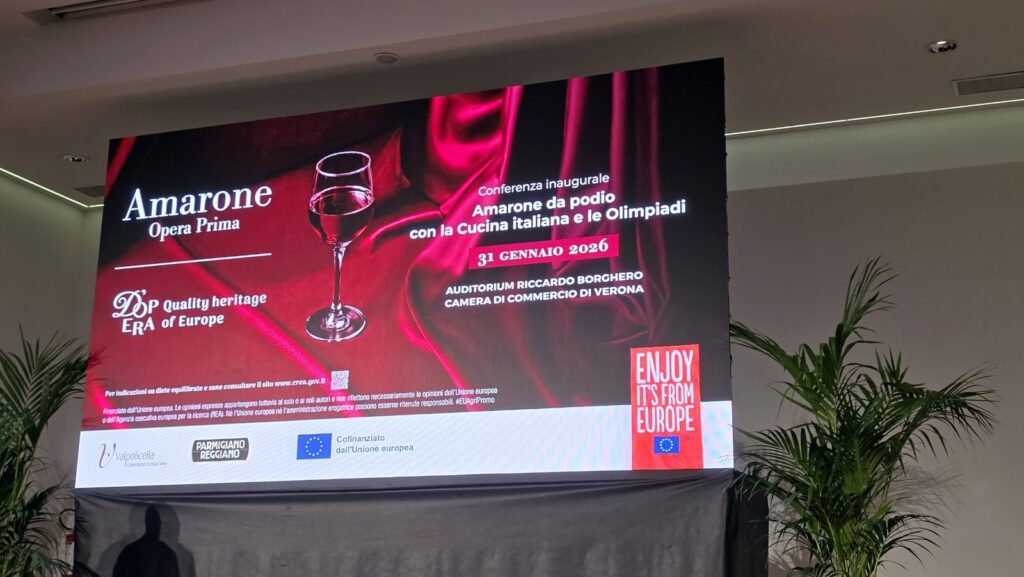
With exports accounting for 60% of production, Valpolicella wines are sold in 87 countries. Based on data released by the Consortium during Amarone Opera Prima 2026 , exports of Valpolicella red wines in 2025 moved at very different speeds between the two shores of North America, heavily influenced by geopolitical factors and the introduction of US tariffs.
The US market suffered a significant setback in the second half of 2025 due to tariffs imposed in the second half of the year, which dampened orders and reduced importers’ margins. In value terms , exports to the US recorded a 5.8% gap.
Unlike the US, Canada confirmed its position as the top buyer in 2025, a true safe haven for the appellation with growth of 4.8%. The Canadian market once again demonstrated its appreciation for Amarone, partially offsetting the losses recorded in other historic markets such as Switzerland (-9.8%) and Scandinavia. For Amarone in particular, 2025 turnover was over 600 million euros.

Beyond Amarone: The Valpolicella System
In the context of Amarone Opera Prima 2026 , the focus has shifted to the “Valpolicella 2030” vision, which represents the direct evolution and completion of projects launched in the previous decade (such as the Green Deal, which began around 2020). It is a “regional reinvention” project based on three fundamental pillars. One of these is the pursuit of increasingly sustainable vineyards, the green revolution in the Valpolicella vineyard of the future. Over half of the vineyards (53%) are now certified sustainable ( SQNPI or Organic). “Sustainability is a fundamental marketing lever for North America and Northern Europe,” explained Christian Marchesini , president of the Consorzio Vini Valpolicella.
From technique to ritual (identity). The project aims to change the global perception of the region: Valpolicella should no longer be identified solely by the “technique” of appassimento, but by its rituals . The goal is to transform the image of Amarone from a simple “powerful wine” to a case study in adaptation and craftsmanship. The focus is on identity (what makes the wine recognizable over time) as opposed to the mere concept of terroir, to prevent Amarone from becoming an “interchangeable” product on global markets.
The pergola revolution. A central focus of the project is a return to the Veronese pergola training method. While it was abandoned in the 1990s in favor of Guyot for reasons of mechanization, it is now being rediscovered as a “cultural architecture.” The practical advantages? It protects the bunches from direct sunlight; it maintains the grapes’ structural freshness and aromatic precursors. The pergola has become the primary agronomic tool for combating climate change. Some producers have noted “it depends” and “not always.” Training vines using the Guyot method is the right choice, they argue, when the vineyard is high and not particularly exposed to the sun’s rays.
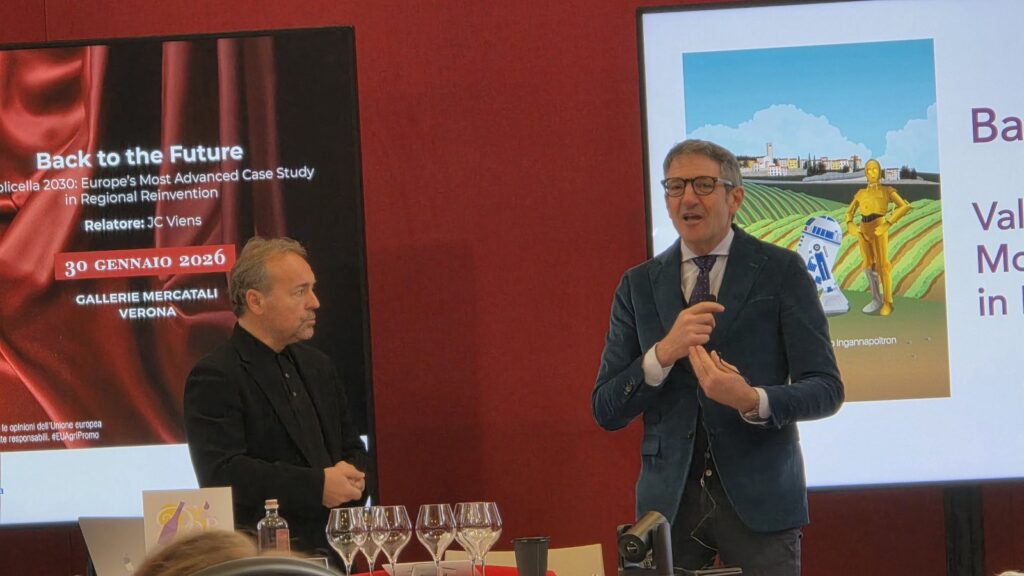
The “Back to the Future – Valpolicella 2030” masterclass, led by JC Viens, highlighted how, in the Valpolicella system, historic practices (such as Recioto and double harvesting) meet technological innovation to ensure that Amarone is not just a collectible wine but also, and above all, a modern gastronomic wine, both today and in the future. The appellation has rediscovered its “duality” through the Ripasso style, a perfect bridge between the freshness of Valpolicella Superiore and the depth of Amarone.
Valpolicella’s “Dream Team”: Nine Signature Interpretations of Amarone
Noemi’s Guaite: the waiting of time – 35% Corvina, 20% Rondinella, 35% Corvinone, 10% other grapes. Vineyards in Mezzane di Sopra. A project that makes patience a theological virtue. The 2021 vintage is a colossus in the making: 100 days of drying and a very long maturation (barrique and six years in bottle) for a blend that encompasses the power of Oseleta and Croatina. If the 2013 vintage is today the portrait of rounded elegance, the 2021 (tasting, barrel sample) is poised to become an ambassador of structure beyond the borders.
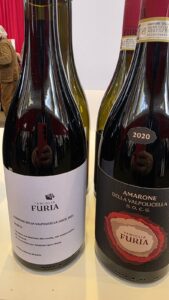 The Furia family: the harmony of Mezzane – Corvina, Corvinone, and Rondinella. From the Mezzane and Tregnago valleys, an Amarone that focuses on the pleasure of drinking. The winery’s goal is the “elegant complexity” that emerges in the 2020 vintage: a wine that never tires, yet invites you to finish the bottle, showcasing the natural character of the grapes with tailored aging in French oak barriques (30% of the blend) and stainless steel (70%).
Massimago: on the side of young people –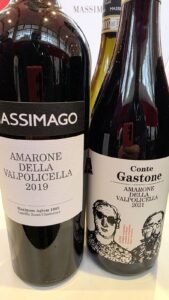 Camilla Rossi Chauvenet challenges the dusty aristocracy of wine with her ” Conte Gastone” 2021, made from the classic blend of Corvina, Corvinone, and Rondinella. This Amarone appeals to young people through iconic labels and a sensory profile based on lightness and freshness. Here, the pergola reigns supreme, translating the 100% limestone soil into floral and fruity notes.
 Celestino Gaspari’s Zimè: a celebration of balance in the glass – Celestino Gaspari has created a 2021 vintage that celebrates the freshness of the fruit: it will be bottled in 2028. The 2019 vintage, however, thanks to spontaneous fermentations and aging in large barrels, focuses entirely on drinkability: an Amarone not for “events,” but for occasions, capable of maintaining its integrity and elegance.
Ilatium Morini: the third generation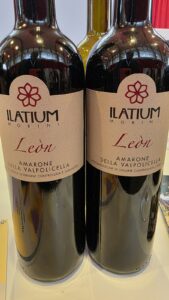 – Amarone Valpolicella Leon. 70% Corvina and Corvinone, 20% Rondinella, and 10% Croatina and Oseleta. Vineyards in Mezzane di Sotto. A passing of the baton for the Morini family, resulting in masterful management of alcohol content. The 2021 barrel-aged vintage already displays balance, comparing favorably with a powerful (16.5%) yet consistently composed 2019. Here, rural wisdom meets modern technology, between 500-liter barrels and espalier training systems.
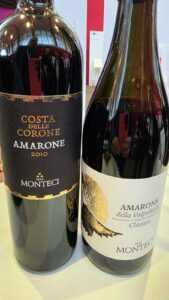 Monteci: Between Classico and High Altitude – The winery brings together two souls: the sunny 2021 Amarone Classico (85% Corvina, 15% Corvinone and Rondinella) and the verticality of the 2010 “Costa delle Corone” selection. This is a “special” Amarone cru, born at 600 meters above sea level in Fumane, which demonstrates how high-altitude Corvinone can defy time by combining grace and power.
Novaia: the return to the origins –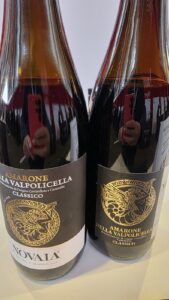 A winery that “comes home” by replanting the pergola to protect itself from the sun. The 2021 glass is already expressive and vibrant, but the comparison with the extraordinary 2011 reminds us of the aging potential of the Marano Valley: an Amarone that reaches its peak after ten years and can remain there for thirty.
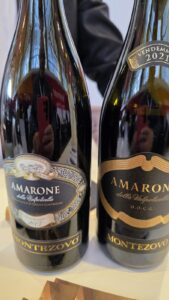 Montezovo: Oriental elegance – Located in eastern Valpolicella, the Cottini family-owned winery thrives on altitude (up to 600 meters). Comparing the young 2021 with the sumptuous 2007 reveals the winery’s signature style: silky tannins, extreme smoothness, and a finish that speaks of the grace of time passing slowly.
Talestri: From Method to Ritual – Amarone della Valpolicella DOCG 2016. With its Amarone, Talestri (a female-run winery, led by sisters Anna, Lisa, and Francesca under the guidance of their father Francesco Marcato) elevates technique to a generational symbol. Don’t just call it appassimento: here, they celebrate the “settling,” a ritual that transforms the grapes into a spicy and balanced nectar. It’s the manifesto of those who challenge themselves, bringing the ancient wisdom of the Veronese region into a modern and vibrant guise.
According to Marco: the architecture of the pergola – Amarone della Valpolicella Classico DOCG 2016. We can define this Amarone as an act of agronomic resistance. Here, the “pergoletta” is not just tradition, but a tool to regulate the pace of maturation and protect the aromas from the scorching sun. The result is a structural, not corrective, freshness that reveals itself layer after layer in a complex and artisanal glass.
Santa Maria Estate by Gaetano Bertani: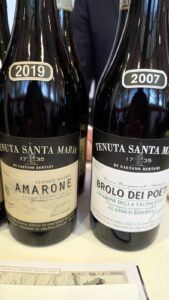 The Monumental Reserve – Amarone della Valpolicella Classico Riserva Brolo dei Poeti DOCG 2007. A garnet red in the glass that takes us on a journey through time with a clone selected in the 1980s. A very limited production (only 1,600 bottles) from a historic 17th-century vineyard: a wine of extreme sartorial precision, where the low yield guarantees an extraordinary aromatic concentration that immediately releases hints of wild strawberries. This is a wine defined as “monumental” which, after long aging in large barrels, unfolds on the palate like a “peacock’s tail.” Savory, persistent, and intact, it represents the pinnacle of longevity for a Cru that excites with its tension and structure. A wine of gastronomy and longevity. Absolutely top-notch!
There’s not just Amarone
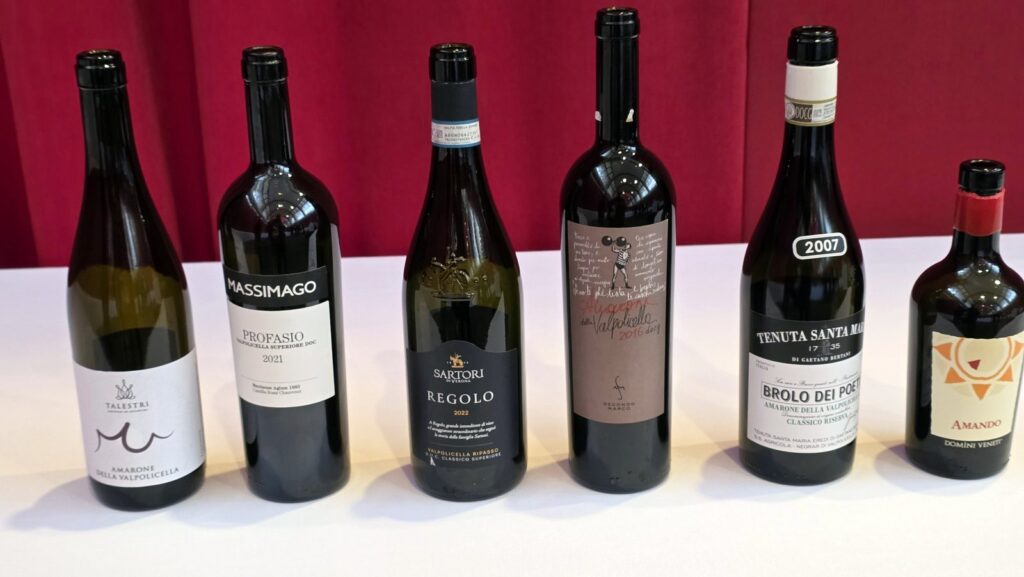
Massimago: The Precision of the Organic Terroir – Valpolicella Superiore DOC 2021 Organic . This wine is a declaration of love for fresh grapes. No drying, just “heroic viticulture” that speaks through crisp red fruits and floral notes. A young wine that displays a surgical precision in describing the limestone terroir, focusing entirely on a thirst-quenching freshness.
Sartori di Verona: the “model” Ripasso – Valpolicella Ripasso Classico Superiore 2022. Often mistakenly considered a secondary character, Sartori’s Ripasso asserts its role as a “bridge” between freshness and depth. It’s not a random wine, but rather a deliberate one, born from a reconnection with history: the Recioto skins give soul to a dual wine, hailed as the absolute model of the category for its recognizability and balance.
Negrar Domini Veneti Winery: Ancestrale Amandorlato – Recioto della Valpolicella Classico Amandorlato DOCG 2015. The journey ends where it all began: with the Recioto Classico Amandorlato 2015. It is the wine of Pliny the Elder, the refreshment of mothers in childbirth, the ancestor of Amarone. Delicately sweet and with a bitter almond finish that defines its character, it is a perfect example of winemaking “self-control”: a historic gem that pairs divinely with aged cheeses.