



by Umberto Gambino
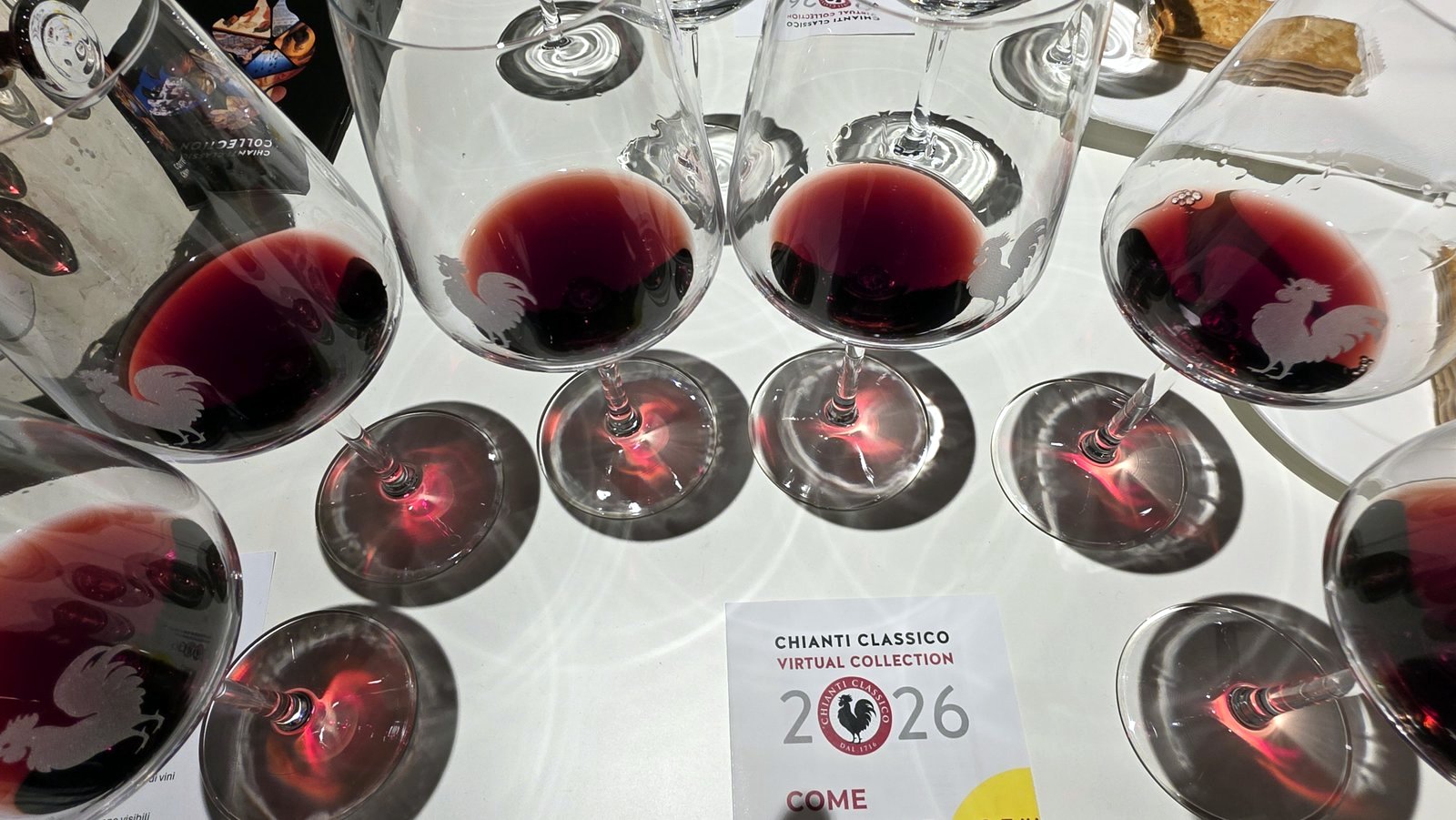
The 33rd edition of the Chianti Classico Collection , which concluded yesterday in Florence, confirmed the centrality of the historic DOCG in the Italian wine scene. Not just wine, but also a cultural and strategic platform for one of the most established denominations in the world. At the Stazione Leopolda, transformed for two days into the capital of the Black Rooster , the message chosen for 2026— Wine is Culture —found a vivid and symbolic representation in the large three-meter-tall statue of Bacchus, embodying the manifesto of a wine that asserts its historical identity even before its commercial one.
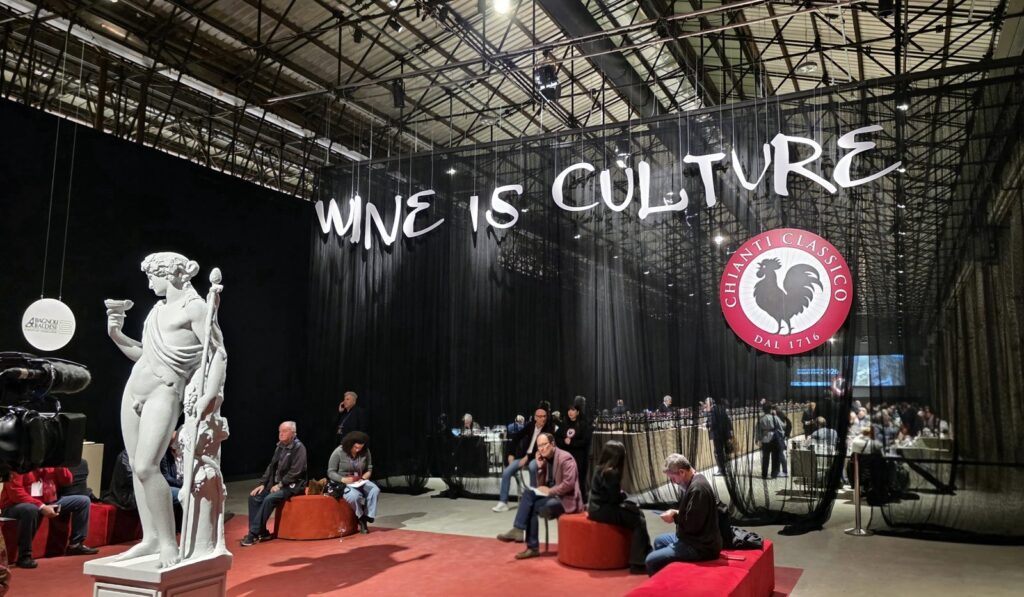
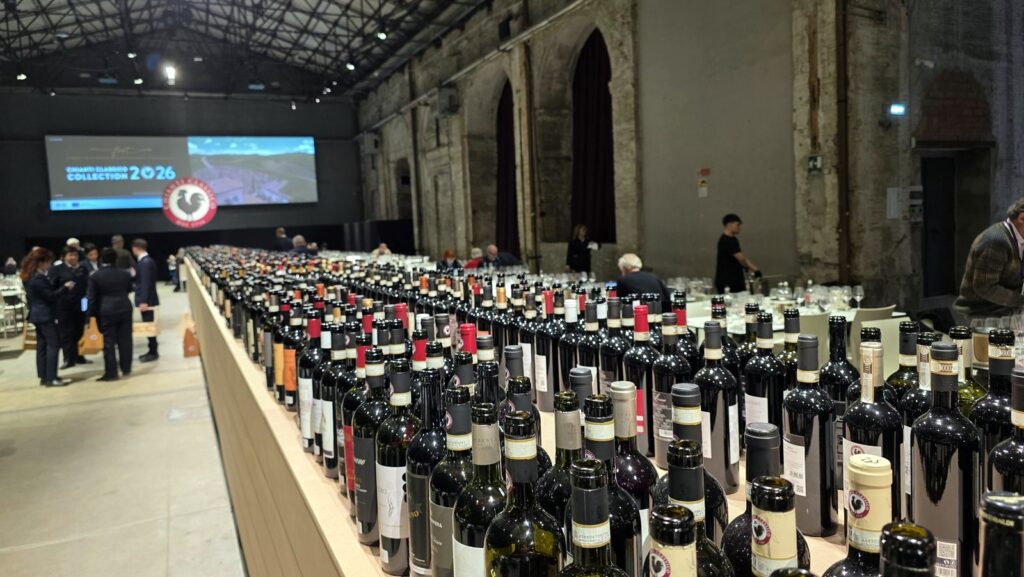
The numbers speak for the event’s success: 223 exhibiting companies , an all-time record, gave voice to the territorial complexity of Chianti Classico, confirming the Collection’s ability to represent all the nuances of the appellation year after year. The international press also had a strong presence, with nearly 400 accredited journalists from 23 countries , demonstrating an interest that extends well beyond national borders.
The trade response was excellent: 1,500 Italian operators , supported by professionals from North America and Northern Europe, key markets in a consolidation strategy in mature countries. It is no coincidence that North America accounted for 49% of sales in 2025 , with Canada performing particularly well, rising to 12% of exports .
Economically, the appellation’s results are clearly positive. In an international context marked by geopolitical uncertainty and declining consumption, Chianti Classico continues to grow in volume , exceeding the previous year’s result by more than one percentage point. The value data is even more significant: growth is continuous and structural, driven by the premium Riserva and Gran Selezione styles, which today represent 43% of volumes and over 55% of turnover .
Despite the strong export vocation, the Italian market remains central, with a 19% share of sales . A shift in consumer behavior is clearly evident here, epitomized by the slogan “drink less, drink better,” which particularly rewards Gran Selezione , recognized as the pinnacle of quality for the denomination and increasingly valued in terms of average price.
Abroad, the United States consolidated its leadership, rising to 37% of volumes , while Canada recorded 33% growth, driven primarily by Riserva and Gran Selezione. In Europe, Germany and Scandinavia showed significant growth in value, a sign of mature and increasingly informed markets. Sweden, with an increase of almost 7%, is noteworthy, where the Annata typology continues to serve as an effective calling card.

The Asian market is showing a unique performance: China, Singapore, and Hong Kong are not yet impacting volumes, but they are showing a high average value , the result of targeted promotional strategies. Finally, on the European front, France stands out, where Gran Selezione is experiencing a real surge: a strong symbolic recognition, especially in the market of its “cousins” across the Alps.
The theme “Wine is Culture” wasn’t just a slogan. Since 1716 , the year the historic boundaries of Chianti Classico were defined, wine has been the expression of a complex system of landscape, rural architecture, villa-farms, agricultural knowledge, and collective memory. This heritage today includes over 150 historic villas and more than 300 protected sites , safeguarded by winemakers who are both producers and guardians of a shared cultural heritage.
The Chianti Classico area’s candidacy for UNESCO World Heritage status fits within this framework, currently in the advanced stages of technical evaluation by ICOMOS. The project concerns the Farmhouse Villa System , understood as a unique cultural landscape, supported by the Tuscany Region, the Gallo Nero Municipalities, and coordinated by the Foundation for the Protection of the Territory.
The 2026 Chianti Classico Collection ended as it began: with the awareness that in this area, wine is not just an agricultural product, but the living result of a millennia-old culture that continues to generate value, identity, and a future.
The words of Giovanni Manetti, president of the Consortium , are emblematic: “Chianti Classico demonstrates that wine is not just a product, but a cultural heritage to be told and shared, capable of growing in the global market without betraying its territorial identity.”
Our tastings
The appellation presents itself with a confidence acquired over the years, now firmly rooted in tradition. The Gran Selezione typology confirms its status as the region’s true stylistic laboratory, while the 2024 vintage surprises with its compactness and already discernible average quality, despite many of the bottles presented still being in the process of settling in, with tannins, oak, and alcohol levels yet to be refined. Some of the bottles presented were barrel samples not yet available for sale.
Gran Selezione: identity, depth, territory
For us, the Castello di Gabbiano – Vigneto Cerbaiola 2022 stands out, a true standout. The wine combines a rarely refined iodine-balsamic matrix with a deep, savory, and long-lasting progression on the palate. It’s a Gran Selezione that focuses not on muscular impact, but on balance and aromatic layering, already harmonious and with plenty of room for evolution.
Also at the top is Villa Vallacchio – Cristiana 2019 , which plays on warm, deep tones: dark chocolate, tobacco, and licorice intertwine with vibrant fruit. On the palate, it’s powerful, supported by acidity and fine tannins, with a decisive yet never overbearing style.
Same rating for Borgo Casa al Vento 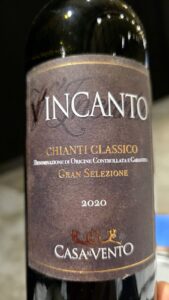 – V’Incanto 2020 , probably the most “complete” wine of the lot: elegant, harmonious, immediate to drink but anything but simple, capable of combining softness, freshness and tannic precision.
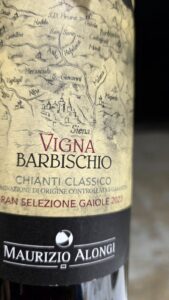 One step away from the podium, Maurizio Alongi – Vigna Barbischio 2023 stands out, one of Gaiole’s most refined interpretations: pomegranate, blood orange and spices translate into a full but slender sip, with chiseled tannins and an already convincing balance.
Castello di Meleto – Gran Selezione 2022 stands out for its modern and balanced profile: freshness, sapidity, and elegant tannins make it one of the wines with the greatest potential for growth over time.
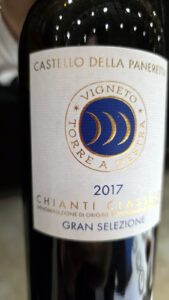
An excellent rating also goes to a surprising Castello della Paneretta – Torre a Destra 2017 , now at the height of its maturity: the sip is harmonious, elegant, without weaknesses, a successful example of controlled evolution.
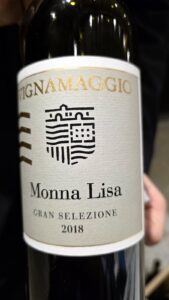 Vignamaggio – Monna Lisa 2018
 demonstrates how a warm vintage can still offer freshness and consistency, while Castagnoli – Salita 2021 convinces with energy, length, and pleasantly enveloping tannins.
Our top ten is closed by two other wines, which we think are above 92 points:
Castello di Ama – San Lorenzo 2022 , impetuous and noble at the same time, still young but already legible in its mineral and balsamic soul, and Bindi Sergardi – Mocenni 89 2020 , which is preferred for its qualities of elegance and softness without ever losing the right taste tension.
2024 vintage: looking more ready than expected
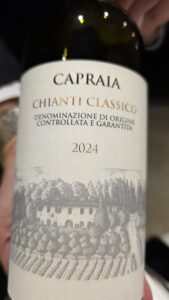 Regarding the 2024 Chianti Classico vintage,
 the surprise was the overall solidity of the samples we tasted. The best, for us, was the 2024 Capraia , an intense, deep wine with a lively yet well-integrated tannic structure and a length that goes beyond the average for the type. It’s a wine that promises longevity.
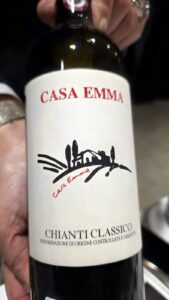
The Antinori – Peppoli 2024 is very focused, interpreting the classic Chianti Classico with precision: distinct cherry, rosé, freshness, and well-balanced tannins. The Brancaia 2024 focuses on a darker, more gastronomic profile, almost “steak-like,” with concentration and structure. The Capaccioli 2024 surprises with its aromatic clarity and definition on the palate, while the Casa Emma 2024 confirms its dynamic, balanced, and modern style.
Overall, the 2026 Collection portrayed a Chianti Classico increasingly aware of its own capabilities: the Gran Selezione Tops seek precision rather than excess, while the Vintages display a quality that makes the appellation credible across the board. A terroir that has found its voice and now expresses it with ever greater confidence.

Pure Canaiolo, a surprising bottle that stands out from the crowd
Baciate Me – Toscana Rosso IGT 2022 – Made from a few rows of 50-year-old Canaiolo grapes, it expresses the varietal character of the grape with its fresh aromas of cherry and raspberry, complemented by light floral and spicy notes. On the palate, it is fresh and juicy, with gentle tannins and a balanced acidity that supports perfect drinkability. Congratulations to the five friends in San Casciano Val di Pesa (Florence) who embarked on this promising adventure.