


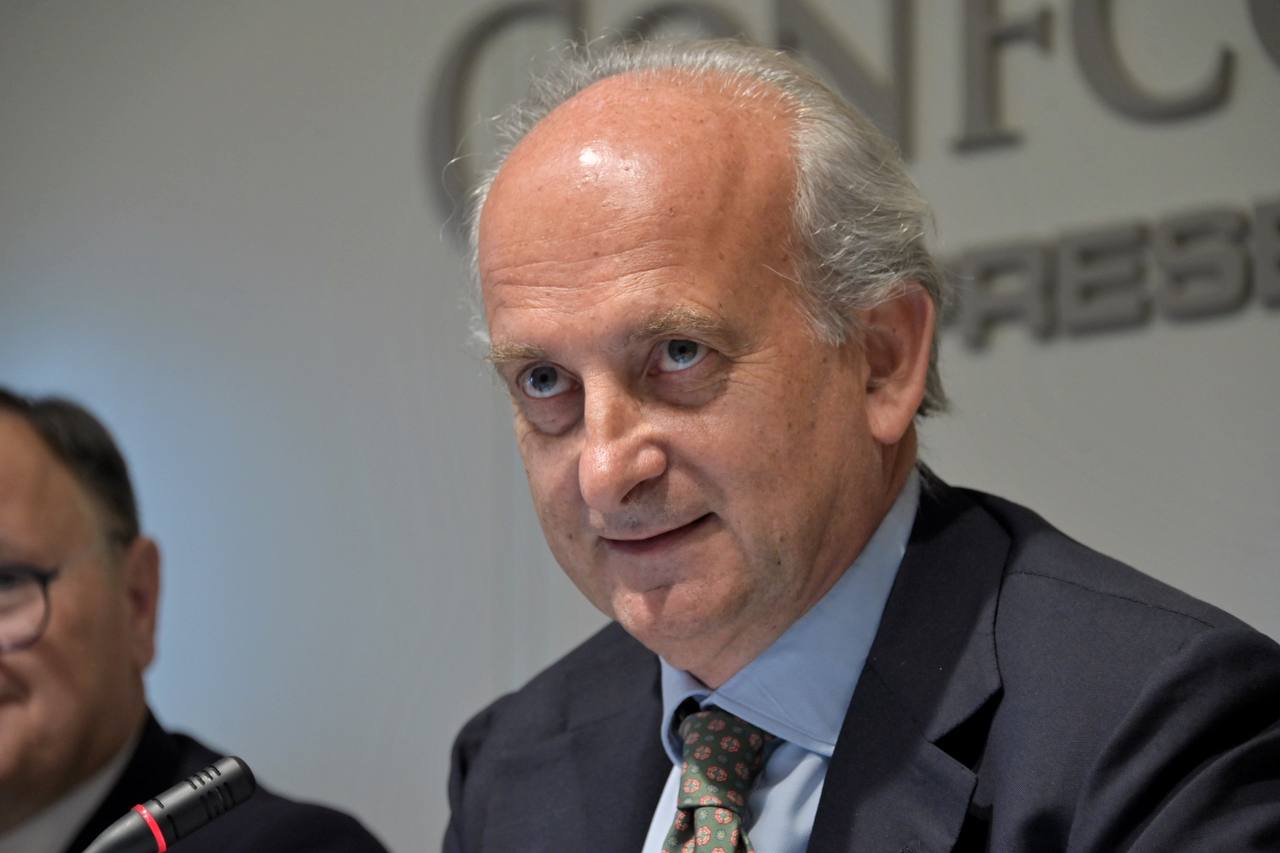
FRESCOBALDI: “INNOVATING THE WINE ECOSYSTEM IN A COMPETITIVE KEY”
Lamberto Frescobaldi was unanimously confirmed as president of the Italian Wine Union (Uiv) for the next three years. The appointment was ratified by the elective Council today on the sidelines of the National Assembly of the main organization in the sector, which has over 800 members for a total turnover of 10.6 billion euros and 85% of national exports .
“I thank the Unione Italiana Vini family for their trust and for what we have done together up to now – said President Frescobaldi – in the knowledge that the next mandate will be even more demanding in terms of challenges to face. The priority objective is certainly to innovate the wine ecosystem in a competitive way: a giant with broad shoulders called today to modify its structure to continue to be a leader. I am convinced that with an awareness by the entire sector, the objective can be achieved”.
SUPPLY EXCEEDS DEMAND, WITH NORMAL HARVEST 90 MILLION HCL RISK IN THE CELLAR AND PRICES COLLAPSE. ITALY THE ONLY COUNTRY IN THE WORLD WHERE VINEYARDS ARE GROWING
CASTELLETTI (UIV): 10% DUTIES IN THE USA ARE CONCERNED, GOVERNMENT ACCELERATES ON MERCOSUR
“In a complex scenario, the sector is called to an awareness. Unione italiana vini calls on the sector to gather together and launch a plan to review the Consolidated Wine Act, in line with the current market situation. The goal is to update the law and its implementing decrees by 2026, 10 years after its entry into force”. This is the proposal of the president of Unione italiana vini, Lamberto Frescobaldi, made today during the national assembly of the association which has over 800 members and 85% of Italian exports. A proposal that – according to Frescobaldi – will have to synthesize the needs of the sector, to tighten the production belt and guarantee the sustainability of the entire supply chain. “Given the decline in consumption at a global level – he added –, we can no longer afford to flood Cantina Italia with harvests of 50 million hectoliters, which represent the production average of the last 25 years”.
DUTIES AND FREE TRADE AGREEMENTS
Chapter on duties: “Even with 10% tariffs, it will be a problem for the sector – said the general secretary of Uiv, Paolo Castelletti – we found it in a survey aimed at companies, which estimate – also due to the devaluation of the dollar – a damage on overseas turnover of 10-12%. We need a more united Europe to be strong and accelerate the signing of free trade agreements. We cannot talk about ‘diversification of outlets’ and then hesitate on important choices such as Mercosur. If today it is complex to access a very receptive market such as the American one with a 10% duty, how can we export to complex markets such as Brazil or India, which record duties of 27% and 150% respectively?”.
On the promotion front, companies are asking for an alignment of the methods of implementing the measure also in light of social transformations. From this point of view, the fundamental aid for promotion on third country markets should be more oriented towards more structured and impactful projects. A revision of the CMO promotion decree should further simplify the rules for access and financing.
THE UIV REQUESTS, LOWER YIELD AND REVIEW THE DOP SYSTEM
According to Uiv, the corrective measures to be implemented urgently concern the entire sphere of supply and demand management of the supply chain. Starting from the lowering of grape yields per hectare also with the end of derogations for generic wines, the alignment of the yields of the specifications with the real ones on average over the last 5 years, with a simultaneous revision of the mechanism that allows redundancies for DOPs (reduction or elimination of 20%), the revision of the reclassification mechanisms, the updating of the timing of adoption of production management tools, the stop to new planting authorizations for one year. For Uiv it is also necessary to reorganize the system of denominations: the first 20 denominations represent 80% of the volume of Italian wine, which means that a disproportionate number of DOC/IGT wines (529 are recognized) exist only on paper. “The anomaly must be resolved through a system of territorial consolidation and reorganization for each region – added Castelletti -. It is a process that should certainly be developed by the individual territories, but which in our opinion could be encouraged and coordinated at a national level by the National Wine Committee whose responsibilities, established by law, should be updated in the Consolidated Law”.
Source: Press Office of the Italian Wine Union