



by Umberto Gambino
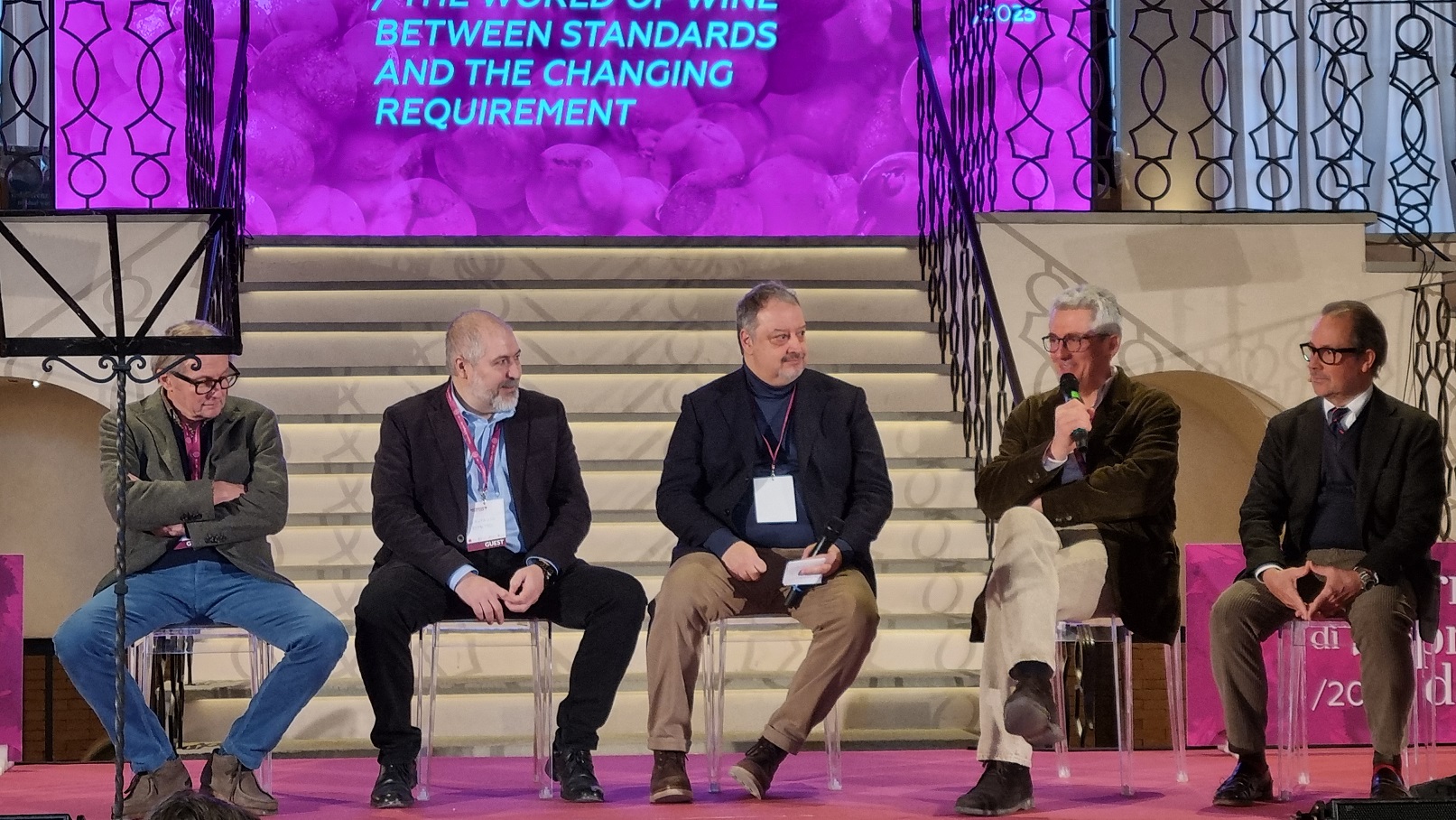
A denomination (intended as winemakers as a whole) that proves to be united, with clear ideas about its identity and its future, determined about what path to take together. This is the impression I had when I participated in the second edition of Valdarno di Sopra Day. The event, dedicated to the Valdarno di Sopra DOC denomination and its wines, took place last February 21st in the splendid Il Borro estate of the Ferragamo family, in San Giustino Valdarno (Arezzo) and closed the week of Tuscan Previews.
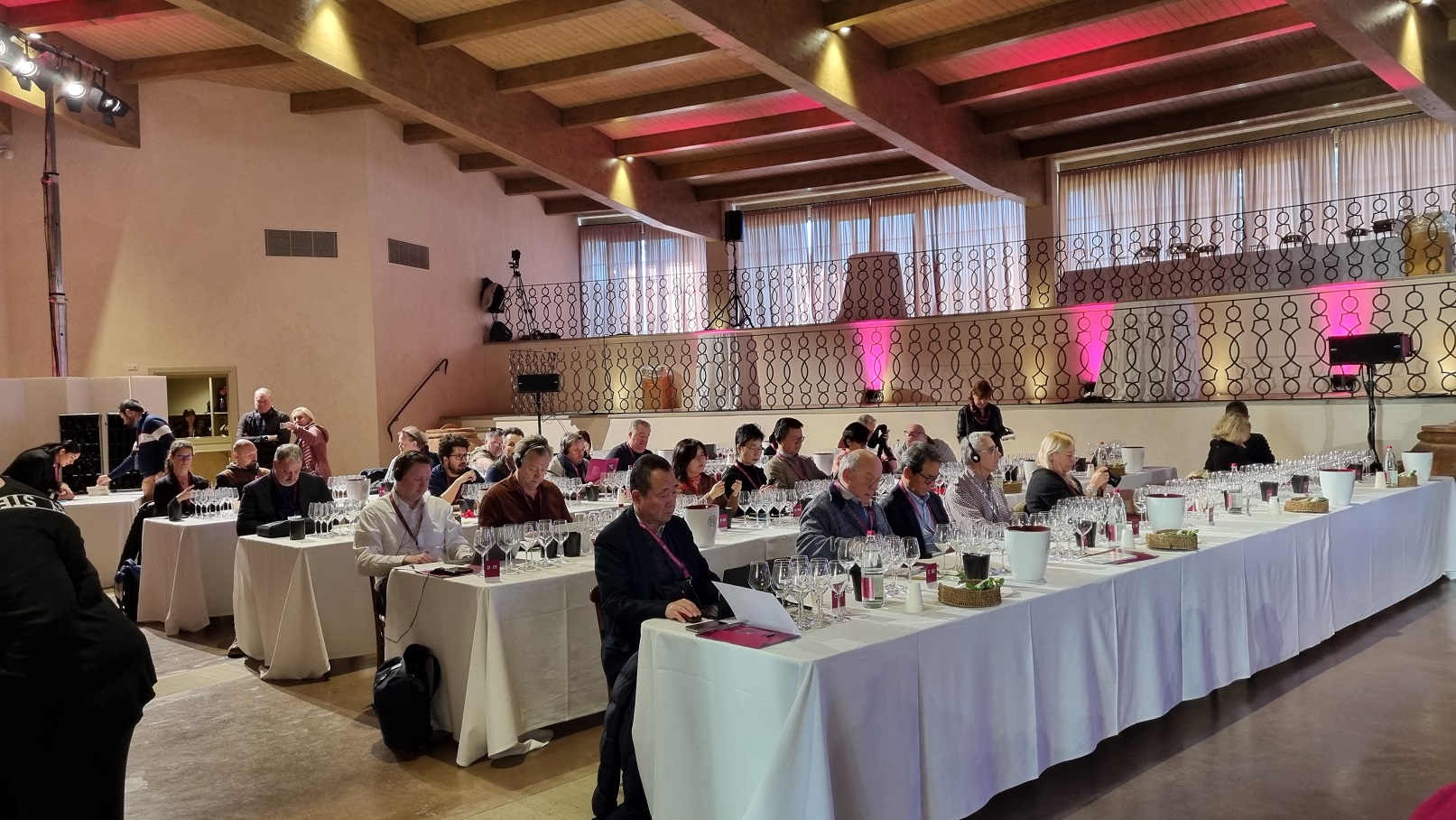
Wine experts, a hundred Italian and foreign journalists and wine producers participated, with a program that included in-depth panels on current events in the world of wine, masterclasses and presentations of the vintages. 15 of the 23 companies associated with the Consortium participated in the preview, with 54 labels for tasting: 32 red wines, 10 white wines and 2 rosés, including pure grape varieties and blends.
“Thanks to the particular soil and climate conditions of our territory, we can obtain great wines,” said Luca San Just, president of the Consorzio Valdarno di Sopra. “The Grand Crus, in our opinion, must come from the best vineyards of each of our companies. It is not the vine that makes the great wine but the small piece of land on which it is planted: therefore the great wines must speak the language of the piece of land from which they come”.
It is good to take stock of the state of the art of the Valdarno di Sopra denomination, created in 2011. On 11 July 2024, after a process lasting five years, the decree approving the changes to the production specification was published in the Official Journal. These are the main new features:
- The production area has been extended to the Florentine part of Valdarno di Sopra.
- The sub-zones were abolished, restoring the territory to its uniqueness, as originally indicated by the edict of Cosimo III de’ Medici in 1716.
- The choice for a territorial and single-varietal denomination has been strengthened with the inclusion of various native typologies.
- In the last year, a greater qualitative growth has begun for wines with the mention “Vigna”, including the Riserva typology.
There has been a marked increase in claims dedicated to “Vigna” wines, identified in the specification as the qualitative pinnacle of the denomination thanks also to the ideal mapping of the most important territorial crus. An increase favored by the good result of the 2024 vintage which, in terms of quality and quantity, has allowed us to overcome the critical issues and problems of 2023, which instead ended with production losses of between 40 and 50% (due to adverse weather conditions and vine diseases), which also exceeded the claims of 2022.
The leaders of the Consortium, together with all the producers, have reiterated their intention to continue the battle to obtain the organic mention for the entire denomination : a project that has been on the agenda for years, but for which definitive authorization is still missing.
The Valdarno di Sopra regulations include 44 types of reds, whites, rosés, late harvests, Reserves, Vin Santo and sparkling wines, which can be produced either as a single variety or in a blend of 16 different varieties. The production area includes 11 municipalities in the province of Arezzo and 4 in the province of Florence. The territory is between the Chianti Mountains to the West and Pratomagno to the East, starting at 170 metres above sea level. Here in the Pliocene (4 million years ago) a lake was created which then, retreating, left canyons to emerge. The soils in which vines are grown today are characterised by structures of Tuscan sandstone and galestro and the entire area is very rainy. From a viticultural point of view, we can distinguish “right Arno” and “left Arno” from which slightly different wines are obtained.
The trend of the vintages tasted was described by the critic and writer Armando Castagno . The 2021 vintage was characterized by a hot summer with some rain at the end of August and significant temperature variations in September, but also by a frost that hit Italy and France in the first week of April. The result in the bottle? Dark, precise, strong, aromatic, potentially long-lived wines. The 2022 vintage , very hot with sporadic rain in August, with a deep ripening of the grapes, led to sensual, full-bodied, expressive wines, of good maturity, thanks also to the high acidity. A truly explosive vintage!
Of interest in gaining an overall picture of the quality of the Valdarno di Sopra denomination was the Masterclass by Master Wine Susan Hulme, entitled “Valdarno di Sopra Wines: A Sense of Identity” , which selected some wines with the “Vigna” mention and others from native vines, relating them to the two different sides of the valley.
These are the wines tasted during Susan Hulme’s Masterclass:
La Salceta – Vigna Ruschieto Valdarno di Sopra Doc 2021 (Sangiovese) 13% Vol.
Tenuta Sette Ponti – Vigna dell’Impero Valdarno di Sopra Doc 2019 (Sangiovese) 14.5% Vol.
Il Borro – Polissena vineyard Polissena, Valdarno di Sopra Doc 2020 (Sangiovese) 14.5% Vol.
Tenuta San Jacopo – Vigna Mulino, Valdarno di Sopra Doc 2022 (Sangiovese) 14% Vol.
Vigna delle Sanzioni – Valdarno di Sopra Doc Sangiovese Riserva 2023, 15% Vol.
Petrolo – Bòggina C Bòggina vineyard, Valdarno di Sopra Doc Sangiovese Riserva 2021, 13.5% Vol.
La Salceta – L’O vigna del Poggiolo, Valdarno di Sopra Doc Orpicchio (native local vine) 2024, 13.5% Vol.
Tenuta San Jacopo – Erboli, Toscana IGT Trebbiano 2022, 13% Vol.
Tenuta Sette Ponti – Vigna dell’Impero, Tuscany IGT Trebbiano 2023, 13% Vol.
Petrolo – Bòggina B, Toscana IGT Trebbiano 2022, 12% Vol.
Il Borro – Bolle di Borro Metodo Classico Rosato 2018 (Sangiovese, 60 months on the lees), 11.5% Vol.
Petrolo – Galatrona Valdarno di Sopra Doc 2021 (Merlot).
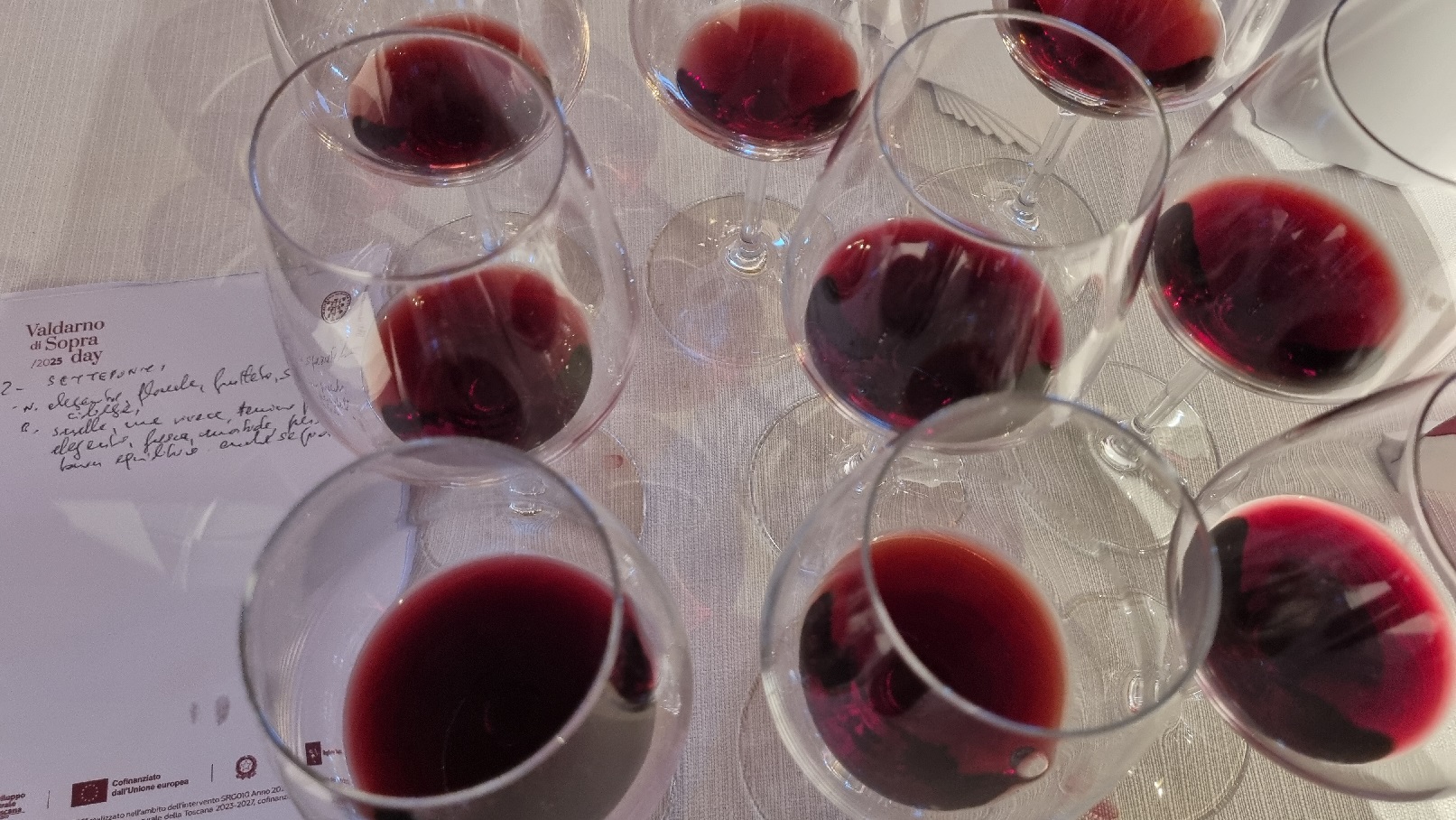
All red wines have in common freshness, elegance, balance and agility of the sip while they are characterized by aromas of red flowers, balsamic, sweet and medicinal spices, small red fruits. Surprise the native white Orpicchio , with notes of jasmine, lemon, green apple and banana, for an aromatic intensity almost similar to Piedmontese Moscato wines.
A special note for Galatrona , a pure Merlot, enveloping undergrowth, dark fruits and notes of licorice that open up in a soft, long and full-bodied sip, with nervous tannins, a sign of youth and the promise of evolution. Bolle di Borro is a Metodo Classico rosé from Sangiovese grapes that releases shades of citrus, raspberry, cherry and toasted bread, with a creamy, savoury and enveloping taste. A great discovery!
In addition to Sangiovese and Trebbiano, among the native vines of the denomination we point out the whites Malvasia Bianca Lunga and Orpicchio , the reds Pugnitello and Foglia Tonda as well as the typical Tuscan Canaiolo nero and Ciliegiolo.